February 9, 2019

The Moipei Sisters
Amarillo Opera
February 1, 2019

It’s not often that sequential presentations by one organization can produce such diametrically opposed  results. But that is exactly what Amarillo Opera accomplished on Feb. 1 and 2 in the productions of the Moipei Sisters and the “Fireflies of Terezin.”

The first distilled sounds of pure delight while the second forced the audience to face one of humanity’s greatest travesties.

The triplets immediately informed the large crowd at Amarillo Little Theatre from the opening note of our national anthem that this evening held wonders.

Though each voice sang in a different register, the similar timbre produced an incredible vocal blend. Half of the evening’s program derived from operas and musicals, the most moving being “O Mio Bambino Caro” from “Gianni Schicchi” by Puccini.

Two of the works came from the Kenyan national repertoire and sung in dialect. These works pulsed with a tribal rhythm that militated against standing still, and all three ladies, and many of the audience bounced to the sound.

Two of the songs had roots in America’s past: “The Sounds of Silence” and “Low Down the Chariot.” Many grandparents in the audience recall the 1960’s when we embraced”Silence” as our anthem.

Every song had its own personality, as did each sister. Each lady also revealed a wacky sense of humor and an enlightened stage presence that kept us laughing between numbers.

The Moipei’s were already well-known in their own country, serving as Kenya’s first ambassadors to UNICEF as well as singing at the inauguration of the Kenyan president.

Through a serendipitous connection with the Marianist Order they found themselves at St. Mary’s University in San Antonio where they have sung the national anthem for the NBA Spurs as well as for the swearing in of the mayor.

Congratulations on their recent graduation. Their plans involve a return to Kenya; hopefully it won’t be too soon as their Texas star is rising and they’re almost fluent in Texan!

Many thanks to ALT for hosting this event, and to James Gardner who accompanied the ladies gratis. Big congratulations go to Mary Jane Johnson and Amarillo Opera who reaffirmed the positive trajectory of the organization as it moves into 2019.

That’s why we can say with pride and confidence: “Keep Amarillo Artsy! Keep Austin Weird! Keep Lubbock in the Rear View Mirror!!!!

February 1, 2019

Richard Resch and Diego Caetano
Schubert’s Winterreise
Amarillo Concert Hall Theatre
January 29, 2019

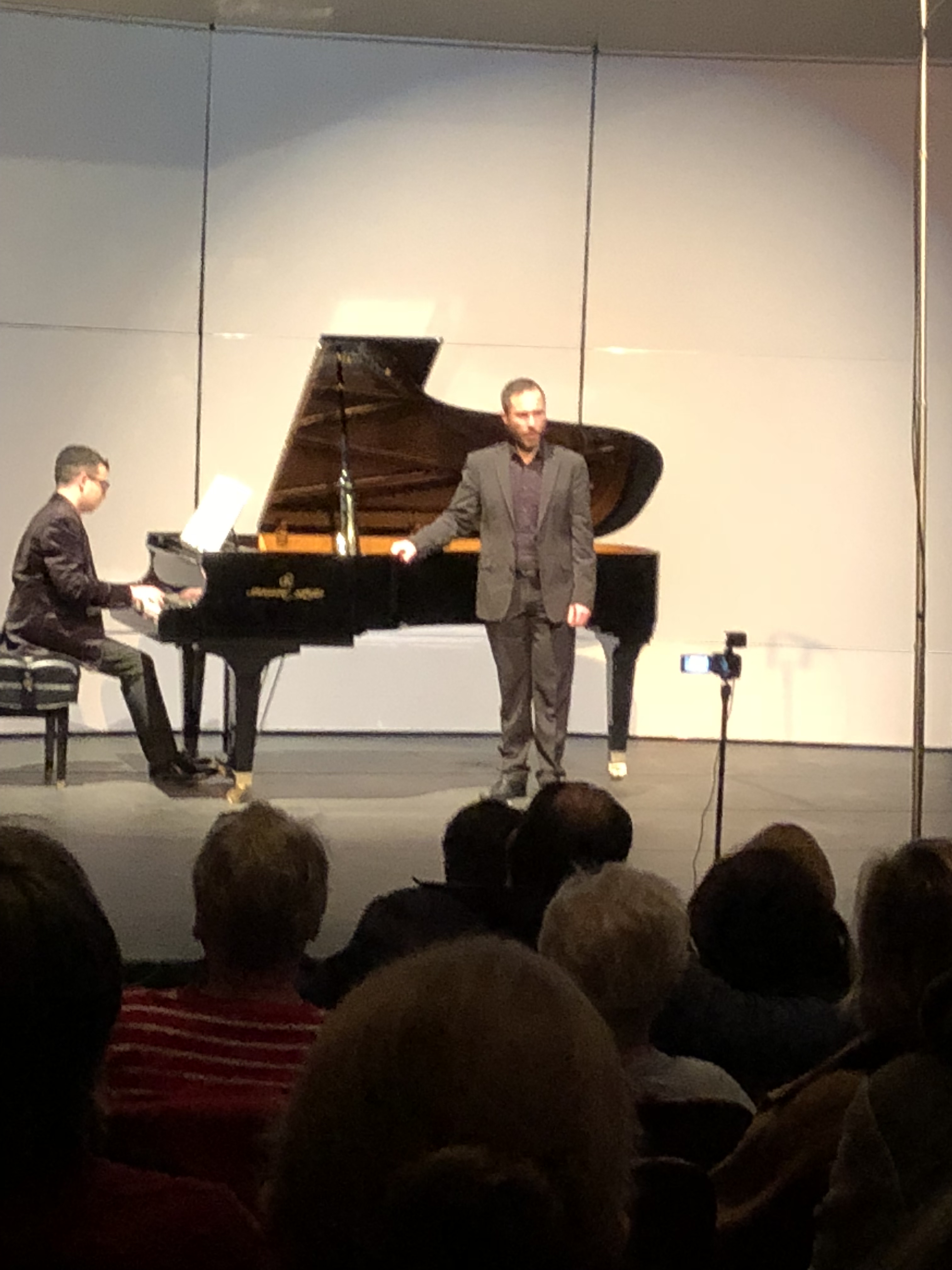
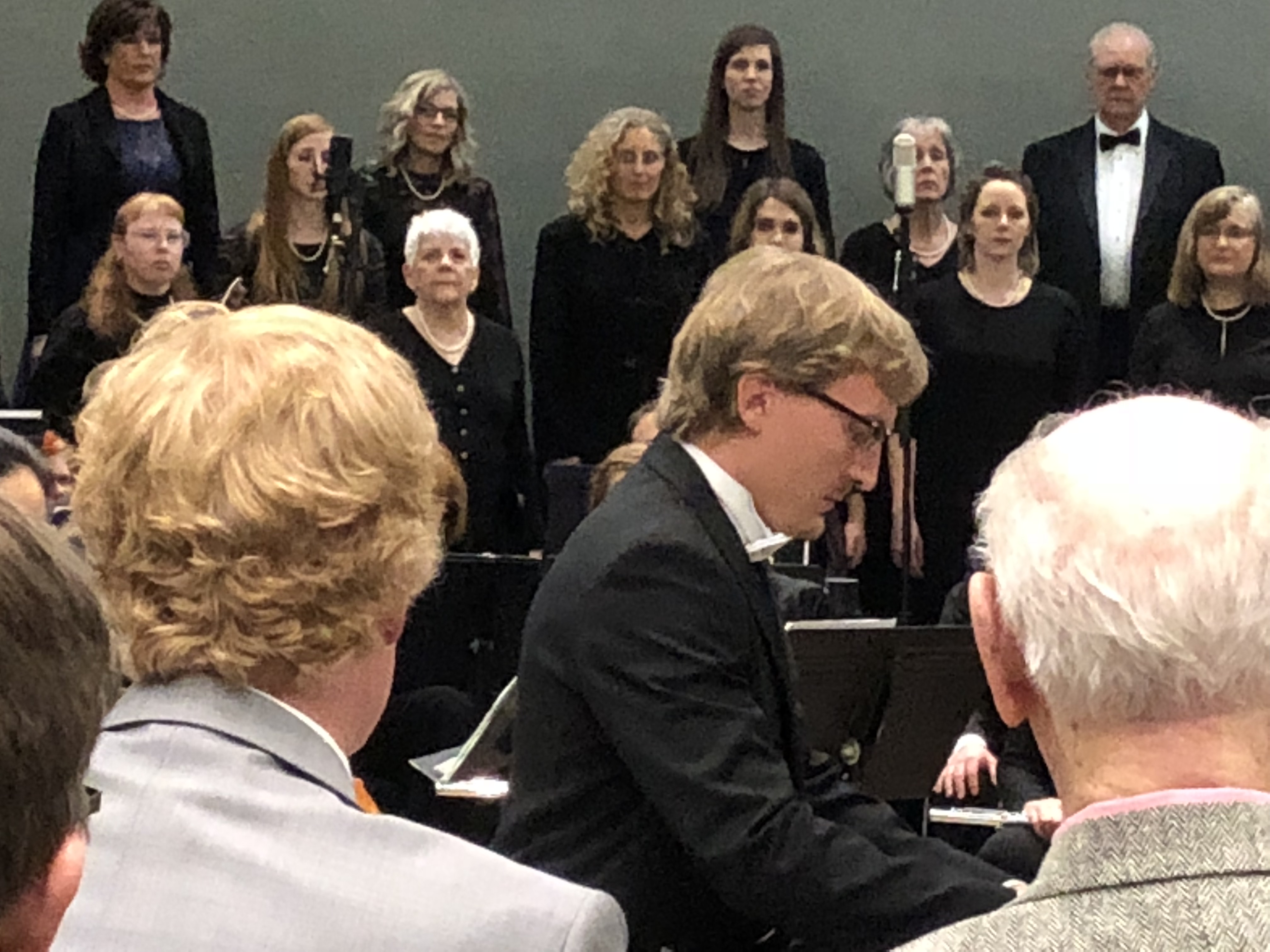
Tuesday, January 29 in the Amarillo College Concert Hall Theatre, a lucky audience of approximately fifty was treated to a tour-de-force of vocal and piano virtuosity  in a performance of Schubert’s “Winterreise” in its twenty-four song, hour-and-a-half entirety. 

Vocal soloist was German tenor Richard Resch, whose upcoming concert schedule over the next three months includes performances in Augsburg, Germany, Jerusalem and Tel Aviv.

He has performed with the Bavarian State Opera and the roster of conductors with whom he’s worked includes the world-renown Christoph Eschenbach. 

Dr. Diego Caetano of AC was the pianist, which in this composition is in a duet rather than accompaniment capacity, and whose score represents the mood of the composer.

And, that mood was indeed dark and despondent as Schubert, suffering from a terminal disease, set this cycle of twenty-four poems by Wilhelm Muller to music. The composer would finish proofing the score only days before his death.

The narrative of the poems is a young man with a broken heart fleeing lost love in winter: hence “Winterreise” or winter travels. Everything he sees and feels, from the cold, to a weather vane to a leafless Linden tree remind him of happier days and reinforces his present desperate loneliness.

Yet, beyond the heartache, “Winterreise” becomes an allegory of life.  Destined for death and beyond the ken of medical science, Schubert involves the listener in his suffering. 

As one artist noted, “You have to be haunted by this work to sing it.”  For the audience, Prozac might have helped because there ain’t no warm fuzzies here!

On a positive note, the effect of this work on German Lieder remains immense.  The vocal and emotional demands of the piece make it, for tenors, a musical Matterhorn.

But climb it with seeming facility was what Richard Resch, along with fellow artistic alpinist Diego Caetano did on Tuesday night. And we, the audience, were enraptured by what we heard despite the downward trajectory of the music’s mood.

We thank Richard, who made a first trip to the states just to add to the cultural conundrum that is the Panhandle.  Also, our abiding gratitude remains with Diego, who has so enriched our lives with the international artists he has brought our way. 

For a sizable crowd to hear a work as rarefied as “Winterreise” attests to the anomaly of the fine arts here in cowboy country. That’s why we can proudly say, “Keep Amarillo Artsy!  Keep Austin Weird!  Keep Lubbock in the Rear View Mirror!!!!
January 29, 2019

Orion Weiss Piano
Tchaikovsky Piano Concerto #1
Jacomo Bairos Conductor
Amarillo Symphony

The Amarillo Symphony, in concerts January 18 and 19, performed works whose common theme might be nationalism. Piano Concerto No. 1 by Pyotr Ilyich Tchaikovsky evokes a new Russian sound, in the genre of Borodin and Mussorgsky. Symphony No. 5 by Jean Sibelius paints a musical picture of Finland while advocating the cause of Finnish independence.

This Tchaikovsky was the piece played by the Texan Van Cliburn when he won the inaugural International Tchaikovsky Competition in Moscow in 1958.

There are those who remember his Amarillo concert on a snowy January night in 1966: I recall three encores at least.

For this Amarillo concert, the slightly built and comedic Orion Weiss was the soloist. From the opening chord he took control of the Steinway to dominate both the keyboard and the piece.

It’s unfortunate that sometimes the soloist modulated the dynamics causing the symphony to play over the piano.

Still, this work remains a crowd-pleaser, with this audience showing their appreciation through two curtain calls and an ensuing encore.

Jean Sibelius remains as enigmatic as he is iconic. The last thirty-one years of his life he composed nothing, living with and through alcoholism into his nineties.

Yet he remains the musical voice of Finland, and Symphony No. 5, premiered in 1915, represents a template for much of his oeuvre.

Claiming his inspiration was a flight of swans, the symphony extols the wonder of tractless primeval forest and innumerable lakes that dominate the Finnish landscape below the circle.

Yet, embedded in this epic tone poem is the call for full Finnish independence. Finland, at this time, existed as a semi-autonomous duchy of the Russian Empire, an empire fractured by war and threatened by revolution.

This work, because of the realization two years later of independence, can be seen as a harbinger of that dream.

An audience half a world away and a century removed were graced by the beauty of that dream, as well as by a work considered the apex of collaboration between piano soloist and orchestra. That we in the heart of the Texas Panhandle could enjoy such sublime artistry made us all feel very fortunate.

That’s why we say: “Keep Amarillo Artsy! Keep Austin Weird! Keep Lubbock in the Rear View Mirror!!!!!”

January 26, 2019

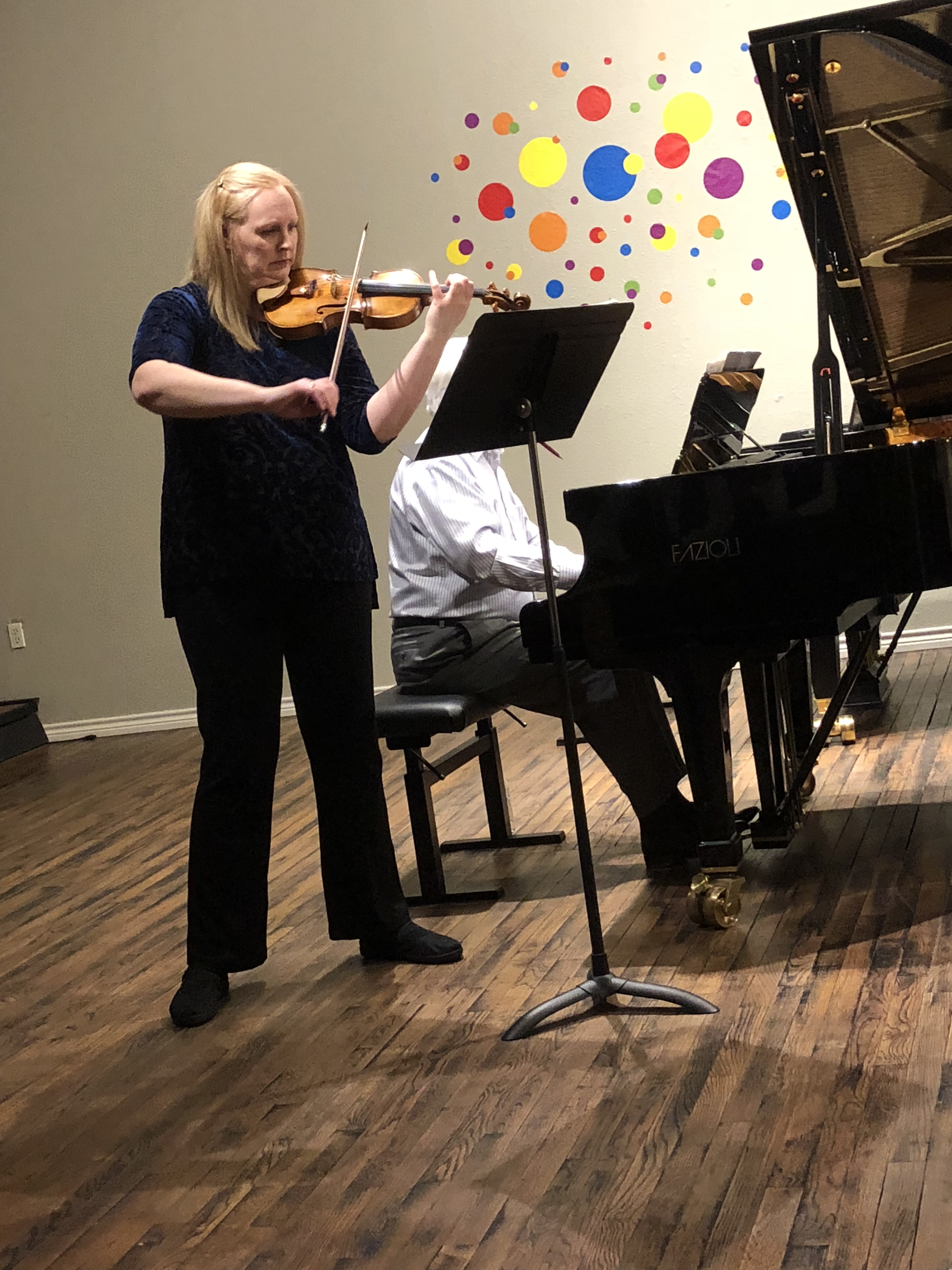
An estimated forty or so hard-core chamber music fanatics were treated at the Fibonacci Space on 6th St. Thursday night to a preview performance of the concert that David Palmer, artistic director of CMA and Annie Chalex Boyle of TTU will play at the Fruttilar Musical Weeks in Frutillar, Chile.

This festival, one the largest classical celebrations in the country, has been held every summer (remember, this is the southern hemisphere) since 1968.  This year’s performers, besides being from Chile, come from seven other countries.  Only one other American artist is scheduled besides David and Annie.

To find out more go to semanasmusicales.c/.

Their program opened with the Violin Sonata #2 by Eugene Ysaye, a Belgian violinist, composer and conductor, sometimes called the “Tsar of the Violin.”

This work, dedicated to his friend Jacques Thibaud, actually mocks the latter’s naivete by contrasting themes: Bach’s Partita #3 and Dies Irae from the mass. With friends like that…..

Into the mix Ysaye’s penchant for tempo robato is evident.  This allows performers license to modulate the tempo for effect.  What emerged from the ferocious bowing and pounding keyboard was a classic battle twixt good and evil, the angels and Satan.

The tempestuous fervor of the double-stopping violin makes the listener think the devil won this round.

The second work was by the Estonian minimalist composer Arvo Part, credited with creation of the Tintinnabuli style which is surreal and spooky. His music taunts the unknown with revelations, like the arctic taiga at -50 degrees F.

His duet “Fratres” uses the same chord repeatedly, opening with a piercing violin that’s just short of a protracted fingernail scratch on a blackboard.

Parts of Parts (cute, huh!) resonate with the impact of a Baltic blizzard with triple f on the keys and an angry, single-chord frenzy on the violin. Then the theme turns lofty and alone, the stillness induced by the paralyzing cold smothering the frozen forest.

Amarillo audiences have heard a pair of Parts – love the play on words – in as many months, the first with Claudio Espejo at the Amarillo College Piano Series. That alone is a commentary of the variety and quality of art here on the plains.

The final work was the Kreutzer Sonata by Beethoven, long regarded as a supreme test for artistic collaboration. The drama surrounding the name is true soap-opera fodder.

The first movement opens with a powerfully dissonant violin which is answered by the piano, which then moves the tonal center a half step, a process often repeated in the piece. LVB would explore this approach most fully in his Diabelli Variations.

Through the first movement Beethoven’s pugnacity is most evident in the violin. And, though the composer seems to mellow in the second movement, the softening is ephemeral as he responds with high energy in the third.

These three demanding works require an enormous empathy between the artists and a sensitivity and artistry equal to the demands of the composer. And, Annie’s and David’s performance, on the Guarneri and Fazioli, was simply world-class, and right here in Yellow City.

We know that they will equally thrill their Chilean audiences, who unfortunately will have to travel up to Texas to hear what so often we take for granted.

That’s why we can say: “Keep Amarillo Artsy! Keep Austin Weird! Keep Lubbock in the Rear View Mirror!!!!!”

Annie Chalex Boyle and David Palmer
Performing
Ysaye’s Violin Concerto #2
Fibonacci Space , Jan 24


January 24, 2019

The Metropolitan Opera staged “Adriana Lecouvreur for HD broadcast January 12, shown locally at the Hollywood 16. Almost a dozen aficionados engaged the four-act, three-and-a-half hour long presentation in first-class lounge chairs, right here in the heart of the Panhandle.

The composer was the Calabrian Francesco Cilea, whose work reflected his Neapolitan musical training. This opera is in the genre of opera verismo, opera true to life which was in vogue in the latter 19th century.

Though the story is based on a real character, the leading Parisian actress in the early eighteenth century, the plot is a big stretch for a verismo designation.

Adriana’s lover Maurizio, a prince of Poland and military hero, can’t make up his mind between serving his ambition or his heart. He finally decides as he holds the dying Adriana. Over the top sappy.

Adriana’s rival in love, the Princess of Bouillon, a married woman, also loves Maurizio.  She is also a pathologically jealous narcissist who has no qualms about murder in the name of love. Hell  hath no fury…..

The narrative tack is a gossipy consequence of the true tale, but this is opera and artistic license is indulged.

And what opera! It requires two divas to play two divas and former prima donnas include Monserrat Caballe and Renata Tibaldi, the latter famously blackmailing Rudolf Bing for a part.

And Sir David McVicars secured the leading ladies of the opera world for the starring roles: Anna Netrebko and Anita Rachvelishvili. Their voices, whether solo or in concert were transcendent! Tenor Piotr Beczala sounded almost puny against this dynamic female duo. “Bravissime’s” echoed like rolling thunder in the Sybil B. Harrington Performance Hall.

Three supporting male roles, all sung by Italians, were well-done and revealed credible characters. The audience showed their appreciation by enthusiastic applause as each took their bows.

This opera was a privilege to see. Like the recent blood moon, Adriana Lecouvreur will not be staged for probably many years, until the likes of Netrebko and Rachvelishvili reappear. That ain’t gonna happen anytime soon!

The Met in HD is but another example of the quality artistic culture available in this supposedly uncultured location. Anna Netrebko in the Panhandle? Yup!

That’s why we keep saying: “Keep Amarillo Artsy! Keep Austin Weird! Keep Lubbock in the Rear View Mirror!!!!

January 22, 2019

Two unique works from different eras and featuring different solo instruments bookended the massive choral presentations at Chamber Music Amarillo’s Concerto Extraordinaire, January 12 at the Amarillo Botanical Gardens.

Poppa Mozart’s work, “Trombone Concerto in D Major,” showcased the alto trombone, played by John Shanks. Composed for a trombone virtuoso the year of Wolfgang’s birth, this concerto was culled from a nine-part Serenata. This was a time when the trombone was finding its place in the evolution of the symphony, and the first two movments project a lyrical quality more akin to the French Horn.

The harmonics and modalities are consistent with the times. No surprises there. But, in the “Presto” Daddy M allows a sense of whimsy and humor, in contrast to the rigid, humorless father and father-in-law from hell portrayed in “Amadeus.”

Sergei Prokoviev’s “Violin Concerto #2” was written in Spain at the conclusion of an eighteen year exile from his Russian homeland. The work is an homage to the struggles of the Russian people, and the cult of heartbreak which frames Russian existence.

But the work is anything but a portrayal of maudlin sentimentality. In the words of the conductor, Michael Palmer, in this piece “Romanticism meets Industrialism!”

The result is almost a mash-up between Tchaikovski and Stravinski. Poignant passages suddenly descend into pulses of anarchy, never allowing the listener a comfort zone. And Annie Chalex Boyle, both interpretively and technically, embraced the challenges of this daunting work and made it her own.

Two concertos and two works for chorus and orchestra, one of which was a world premier made this Concerto Extraordinaire truly extraordinary! Thus we can proudly proclaim: “Keep Amarillo Artsy! Keep Austin Weird! Keep Lubbock in the Rear View Mirror!!!!!”

January 19, 2019

Chamber Music Amarillo’s Concerto Extraordinare on January 12 at the Amarillo Botanical Gardens was beyond extraordinary, enough so that one blog of coverage is inadequate. I will address the performance of the first-ever commissioned work by CMA, “Rejoice, Again!”by Nathan Fryml, as well as Beethoven’s “Choral Fantasy in C Minor.”

Michael Palmer, whose impressive list of credentials begins with Associate Conductor of the Atlanta Symphony to his current position as the artistic director of the internationally-recognized Bellingham Festival of Music served as conductor. Besides featured soloists, the participants included the Amarillo Master Chorale and the Amarillo Virtuosi chamber orchestra.

Nathan Fryml, director of choral activities at Amarillo College, elaborated in the scriptural text of “Rejoice, Again!” a life of praise contrasted with a life in the world. The latter is a source for pain, persecution and frustration: in other words, a complete picture of the mortal condition. The message is intensified by a structural dissonance which emphasizes the spiritual walk – it ain’t all harmony!

“Rejoice, Again! is an epic paean of praise and thanksgiving for chorus and orchestra. This is anything but a pastiche of iconic choral adulations, and is destined to become a 21st century standard.

The parts at times seem almost antagonistic creating what amounts to an arythmic cacophony. And, over the vocal melee, a soaring soprano transcends human noise with a heavenly sound. “And again, I say, rejoice!”

Nate’s staggering achievement put this listener in mind of another Texan who set the bar high for sacred music in the last decades of the 20th century, the late Lloyd Pfautsch of SMU. But Nate has his own song to sing, which is destined to set a new standard for a new century.

As if this world premier were not enough, Nate then served as soloist for Beethoven’s “Choral Fantasy.” Composed by Beethoven specifically to conclude a fund-raiser for Beethoven, the work, in the words of conductor Michael Palmer, “plays to Beethoven’s base.”

In fact, the work was incomplete at performance time, so Beethoven improvised, beginning with the opening solo. If Nate threw in extra cadenzas, he made it sound effortless and seamless, testimony to his own artistry. The response of the Mason & Hamlin grand, along with the Amarillo Virtuosi and the Master Chorale, in this closed setting, was majestic and ethereal!

As we approach the 250th anniversay of Beethoven’s birth, the shade of the master must have smiled at his creation’s performance, alongside a world- premier of another budding luminary, in this most unlikely of places.

That’s why we can say from the heart of the windswept plains, “Keep Amarillo Artsy! Keep Austin Weird! Keep Lubbock in the Rear View Mirror!!!”

Nate Fryml 
Beethoven’s Choral Fantasy
Chamber Music Amarillo
Concerto Extraordinaire

January 12, 2019

The earthly afterlife of Abigail Williams,the primary accuser at the Salem Witchcraft Trials, is explored in the play “Abigail,1702: A Twice-Told Tale.”Written by Nicaraguan Roberto Aguirre Sacasa, who besides being a playwright, writes screenplays and comic books, picks up where Arthur Miller’s “The Crucible”leaves off.

Award-Winning Stage Set for
Abigail, 1702: A Twice-Told Tale
Winter Production for Amarillo College
Used by Permission


The subject is audaceous and so was the decision of the AC Theatre Department to stage the work. Consequentially the production received from the Kennedy Center American College Theater Festival three Irene Ryan acting nominations, three Meritorious Awards for design, and is being considered for the KCACTH Regional in February. 

These accolades were highly deserved. The script asks a lot of mature actors, but to expect dramatis personae barely out of their teens to perform at this advanced level shows not only their tremendous talent but also astute direction.

And, it shows something else about the directors: Monty and Ray are not afraid to roll the dice and ask the seemingly impossible of their players, who responded in turn, incredibly. May the directors, the student actors and the school continue to push the limits of the possible, challenging audiences to leave the comfort zone

But wait, this is Cowboy Country! What’s all this about high-fallutin’ drama? Cowboy Country, yes, and Amarillo yes, where the unexpected in the arts is the norm.

Two other thoughts about the actors. In this play the stage becomes a character. The stark, barren tree trunks light up with kaledoscopic effect to show the presence of the devil. And the devil, as a character, speaks a fluent Puritan patois.After all, in early 18th century New England, Satan was a lively presence, and the stage and actor magnify that presence with Luciferian force.

And, perhaps it was the script, but one wishes to hear seomthing other than Mea Culpa’s and witness beatified behavior from Abigail, before she reclaims her humanity by falling in love and then redeeming her soul.

That’s quibbling, a criticism more of the playwright than the portrayer. This production is a winner, worthy of national consideration, and the AC fanbase can have every hope that the play will advance at the Kennedy Center Regionals.

The quality theatre available at our community college is but another reason we can assert: “Keep Amarillo Artsy! Keep Austin Weird! Keep Lubbock in the Rear View Mirror!!!!!”

January 13, 2019

Sunday,December 2, WTAMU held its much anticipated Christmas concert, with university choirs and orchestra, the Clovis High School Chamber Singers, and ample audience participation. Needless to say, the stage was as crowded as the seated audience.

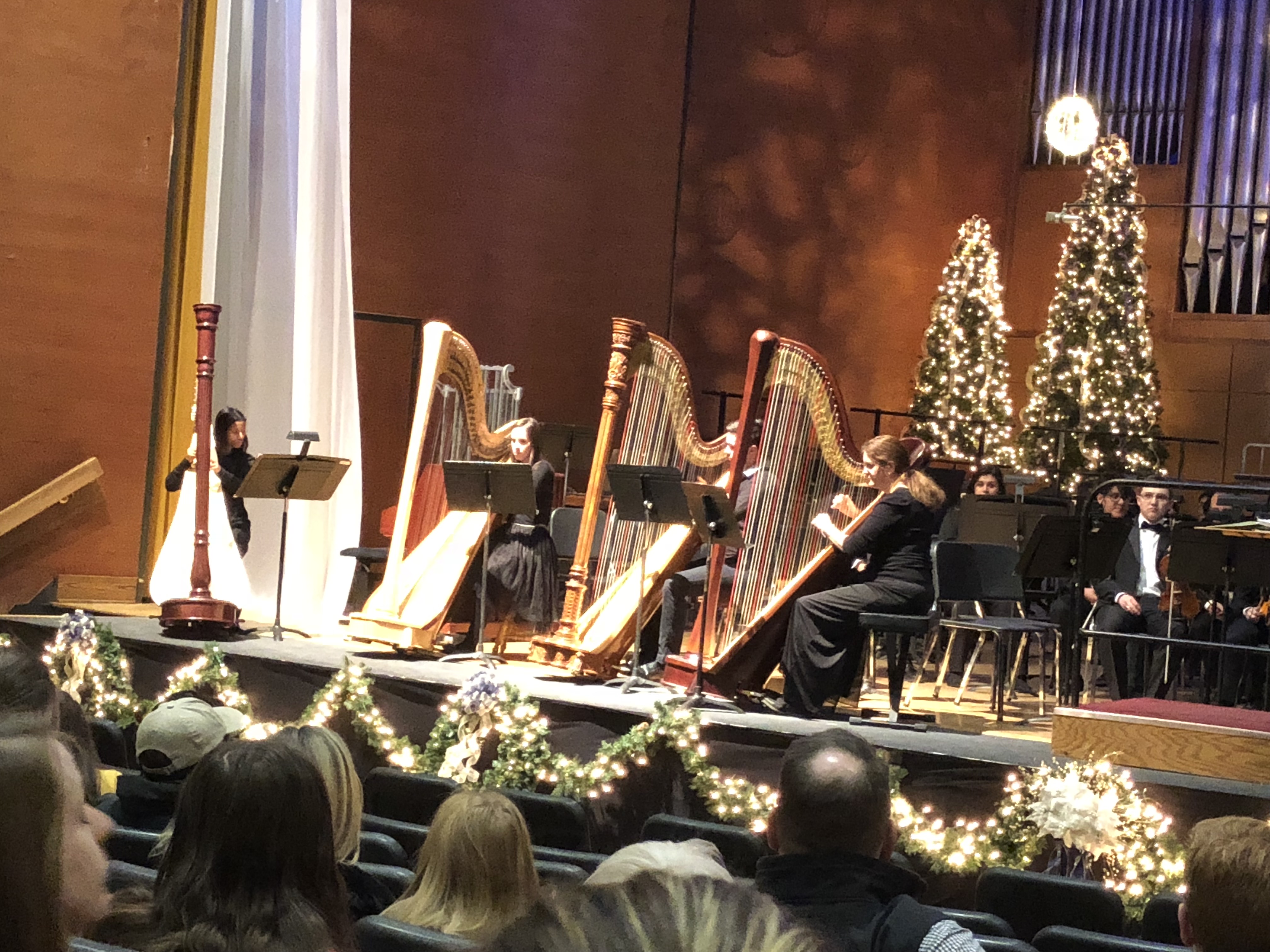
“Massed Harp Prelude”
WTAMU Christmas Concert

The program began with a mass harp prelude – well, there were four, but that’s a 300% increase from the number I’ve ever seen in this ranchy part of the world. Then Dr. Michael Johnson added an organ touch,which can sound like any variety of instrumentation, but did help set the mood.

The University Chorale, directed by Dr. Sean Pullen, performed numbers by Vaclav Nehlybel and Gabriel Faure, in French and without sheet music!

The most impressive piece by the Symphony Orchestra, directed by Dr. Mark Bartley, was “Romanze” by Max Bruch with Vesselin Todorov of the faculty and Harrington String Quartet as the viola soloist. This is the second Bruch I’ve heard locally in as many months.

Perhaps a Bruch Renaissance is gaining purchase here on the High Plains!

Massed Choir and Orchestra
WTAMU Christmas Concert

A mass choir and orchestra number was a selection from Mendelsohn.s “Elijah,” to which the young voices from Clovis High School gave their full throated participation, on equal footing with the voice majors. One imagines that after this experience a number of Wildcats will opt for college enrollment across the state line.

This concert, staged with class and quality, epitomizes the unsurpassed excellence of the WTAMU Fine Arts program, arguably the nation’s finest in D-II regional universities. Its existence is a reason we can say: “Keep Amarillo Artsy! Keep Austin Weird! Keep Lubbock in the Rear View Mirror!!!!!

December 16, 2018

Saturday, Nov. 17 was a triple-header in the arts, a not uncommon occurence in Artsy Amarillo.  It began with the bimonthly meeting of the High Plains Professional Writers, which next year celebrates its centenary, followed by the dedicatory concert of the mega organ at First Presbyterian, and finalized with a Mahler-Mozart concert by the Amarillo Symphony.

Bill Briscoe Canyon Author HPPW Speakder

HPPW, the only professional writers group between Dallas and Denver (Lubbock doesn’t have one) met in the Ed Davis Conference room in the Chase Tower.  The featured speaker was Bill Briscoe, a Canyon author, who gave a most informative presentation spanning the writer becoming first an author and then an entrepeneur.  Both published and aspirant authors profited from his wealth of information.

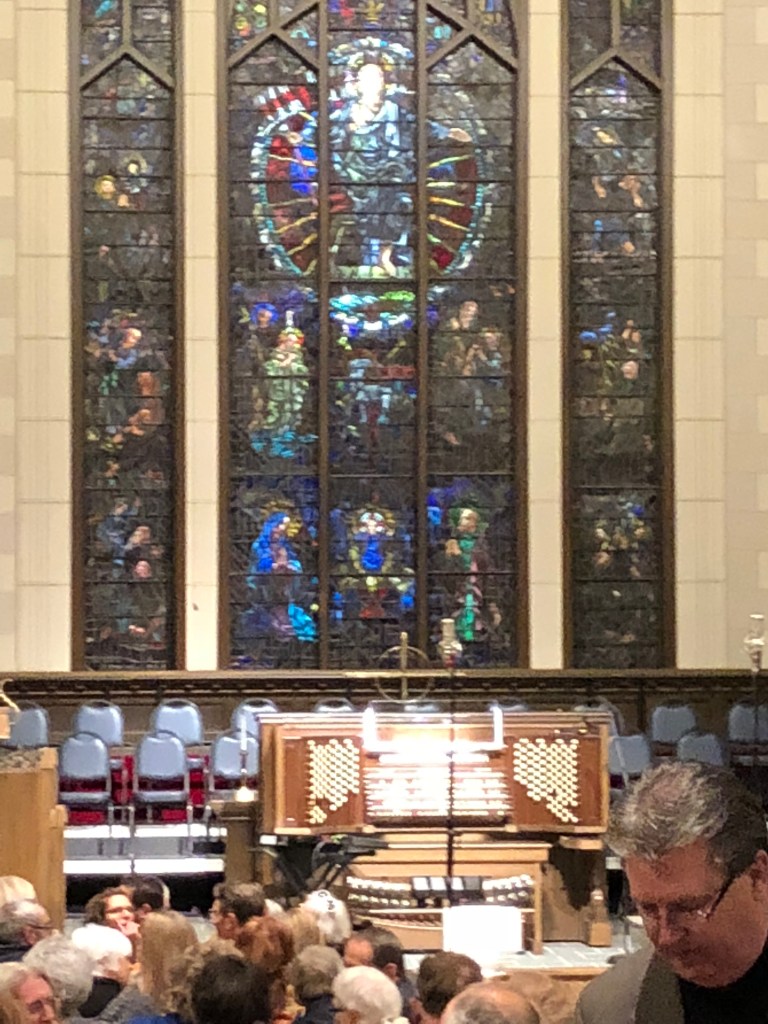
The newly-installed “Norman Goad” organ at 1st Pres. in Amarillo

The dedication of the super organ at First Presbyterian took place at 5:00.  Humbly touted in the program as “the largest, most technologically-advanced organ from Ft. Worth to L.A,” it is the product of generous patronage as well as the professional expertise of church music director Norman Goad.  Besides being on the church staff, Goad manages a company which does all things pertaining to organs, from design, installation and maintenance. 

Now Amarillo can boast of two of the premier pipe organs on the planet: The Aeolian Skinner at St. Andrews and the “Goad.” Anyone for a battle of the world-class calliopes?

The dedicatory concert featured Ken Cowan, head of the organ program at the Shepherd School of Music at Rice University.  He literally pulled out all of the stops, tantalizing and thrilling a packed house with the power and potential of this magnificent instrument.  His varied program included Bach’s Pasacaglia and Fugue, no surprise in a church sanctuary, and Saint Saens Danse Macabre, totally unexpected.  The choice apparently was OK with the Presbyterians: the applause was loud and enthusiastic.

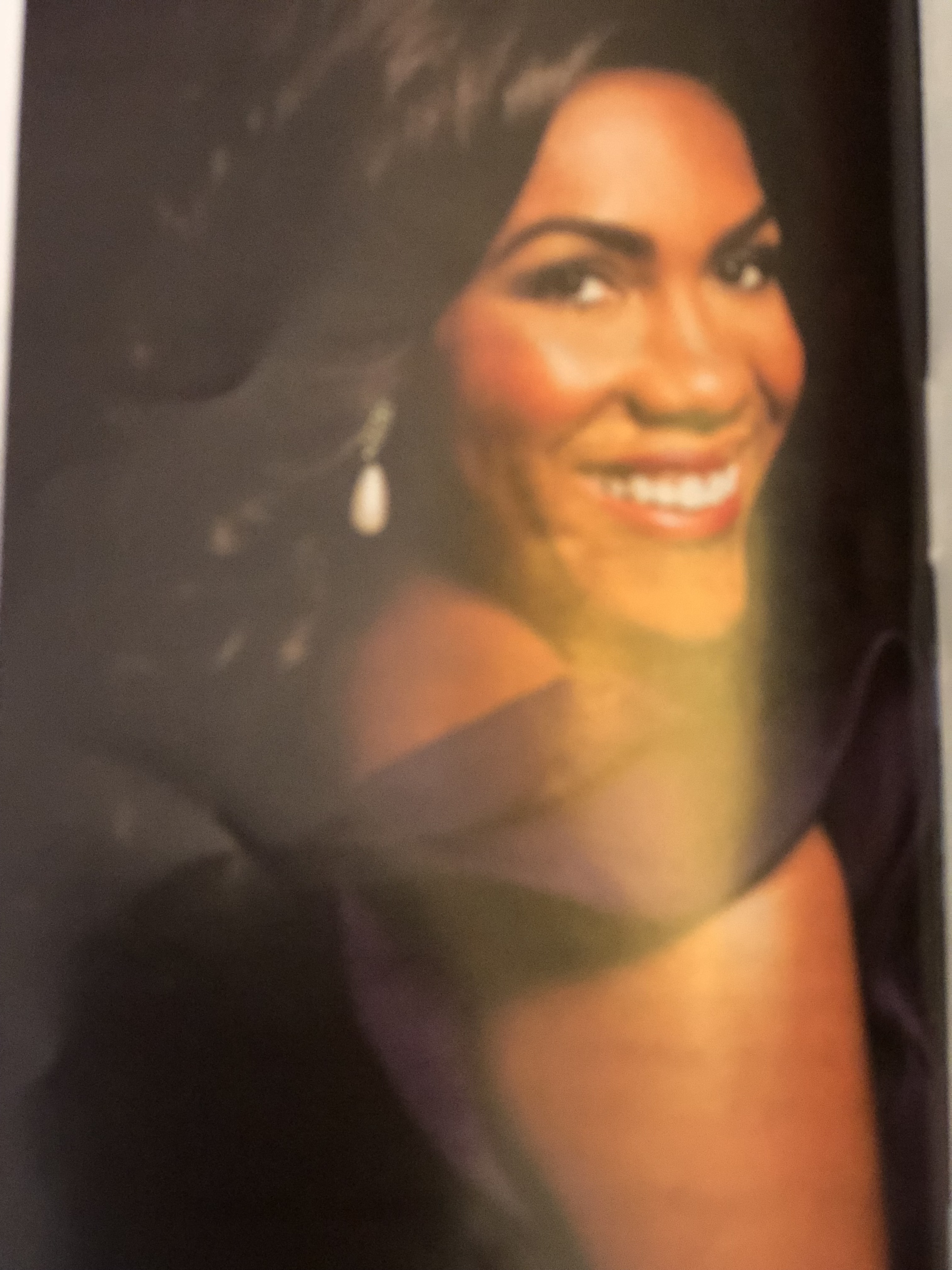
J’Nai Bridges
Todd Rosenberg Photography

Many in the audience, quickly found themselves at Amarillo Symphony for an evening of Mahler and Mozart with a double helping of Bach. Perhaps Mahler’s signature work is “Kindertotenlieder:” Songs on the Death of Children, which is either embraced for its sublime cathartic message, offering hope in a welter of despair, or rejected as a morbid wallowing in thanatophobia.

The featured artist, J’Nai Bridges, had an empathetic warmth in her voice that would move the intransigence of the most ardent anti-Mahlerian.  And, while rehearsing with the Amarillo Symphony, Ms. Bridges received word that she’ll be singing “Carmen” when it’s performed at the Met in 2020!  Congrats J’Nai!  Remember us on the Golden Spread when you take your bow at the Sybil B. Harrington Performance Hall. Does everyone see the Amarillo continuum, as plain as the High Plains?

On this weekend before Thanksgiving, Super Saturday emphasized the thanks we should give for the bounty of the arts in this unlikely place.  In the spirit of Thanksgiving just past, we say, “Keep Amarillo Artsy!  Keep Austin Weird!  Keep Lubbock in the Rear View Mirror!!!!”