Nov. 8, 2019: A Quartet of Amarillo-Area Art Shows

Four local art shows are worth noting: the Amarillo Museum of Art Biennial 600; tape art at the Citadelle in Canadian, Texas; the High Plains Public Radio benefit at the Cerulean Gallery; the student exhibition of Dia de los Muertos in the Commons Gallery of the Fine Arts Complex at Amarillo College.

The eighth Biennial 600, a juried occasion held every two years and open to artists within a six-hundred mile radius of Amarillo, carried the theme of Textile + Fiber. Juror was Alex Unkovic, Exhibitions Manager for the Fabric Workshop and Museum of Philadelphia.

Textiles and fiber, starting with the clothes we wear, are the constant contact art form in our lives. This exhibition, then, explores ways in which textiles, as utilitarian, become conceptual art forms.
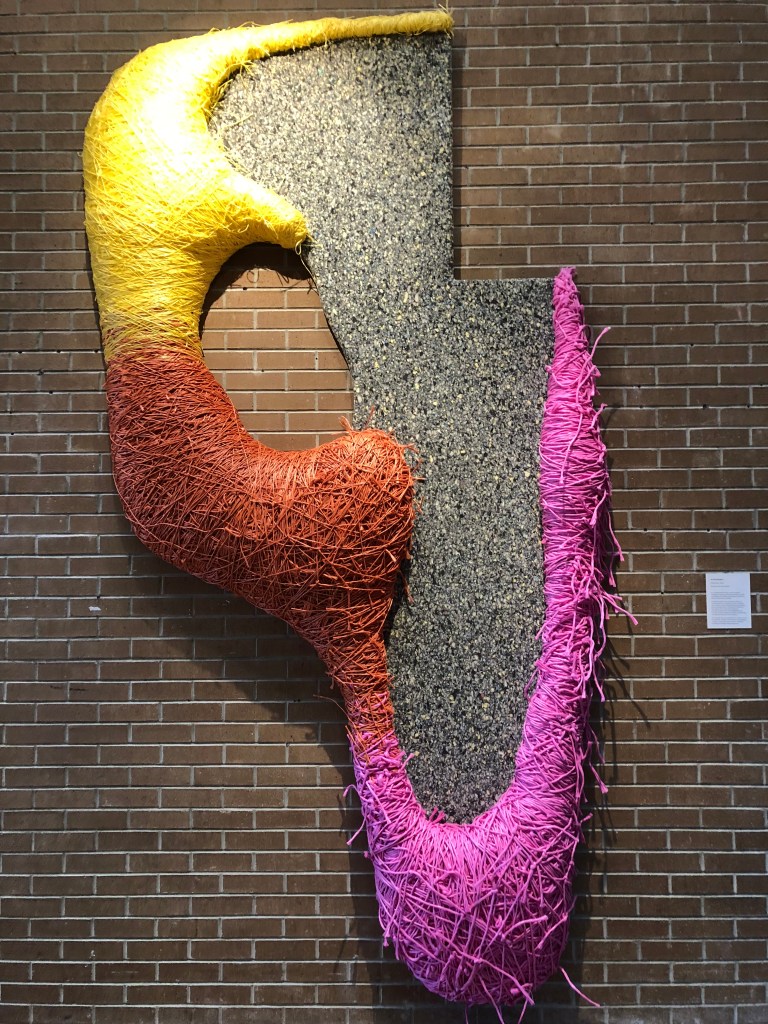
First Place
Scottie Burgess
Substratum, 2019

The first-place winner, Scottie Burgess, created a large work using carpet padding and colored bailing twine, with each knotted length signifying a continuum, an end which becomes a beginning.

Two Santa Fe artists present at the opening shared interesting insights about their work. Julie Nocent-Vigil used Hanji paper and a Korean thread technique to portray the tapestry of the plains, something to which we in the Panhandle can relate.

Julie Nocent-Vigil
Glimmer: Tallgrass Impressions

Kathleen McCloud’s work is informed by her time at an ashram in India and how Gandhi made weaving cloth a visible symbol of rebellion against tthe British Empire.
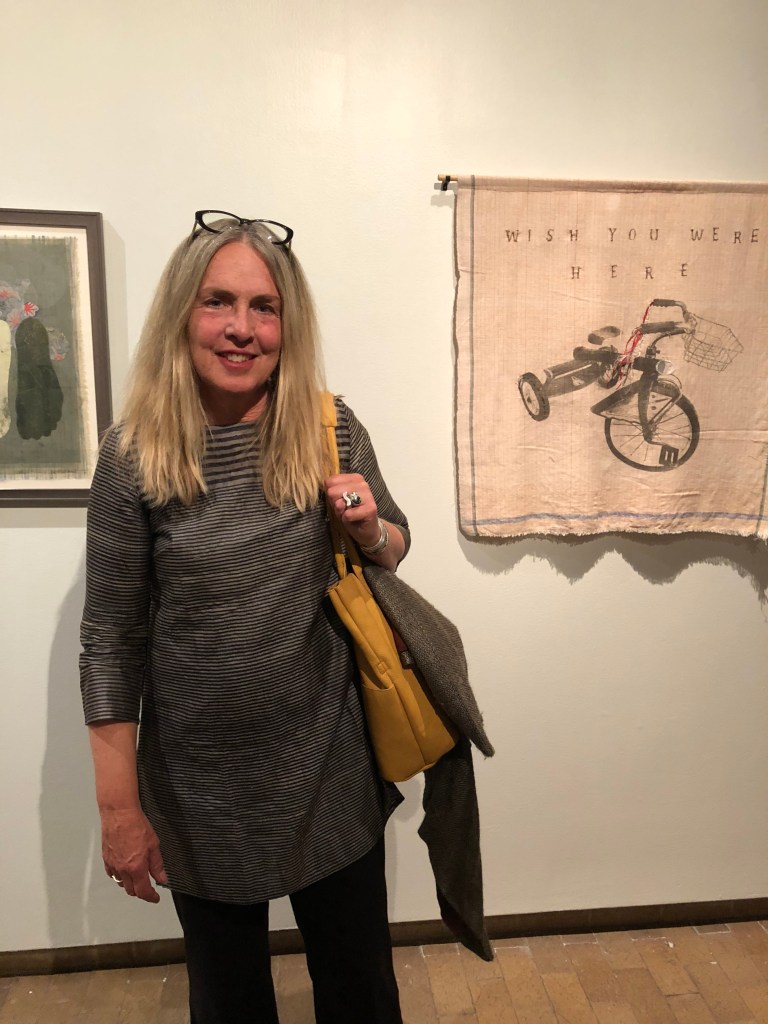
Kathleen McCloud

Jennifer Weigel’s work takes the viewer by surprise, illustrating the truism that, in the world of Amarillo art, the unexpected is the norm.

Tampons as jewelry? The artist’s assertive iconoclastic feminism openly assails the taboos and cult of silence surrounding menstruation by making the implements art.

Jennifer Weigel
Tampon Jewelry

Finally, Brenda Bunten-Schloesser, created a trio of quiltish sculptures. One, A Light, shown here, resonates with both Boccioni and Klimt.
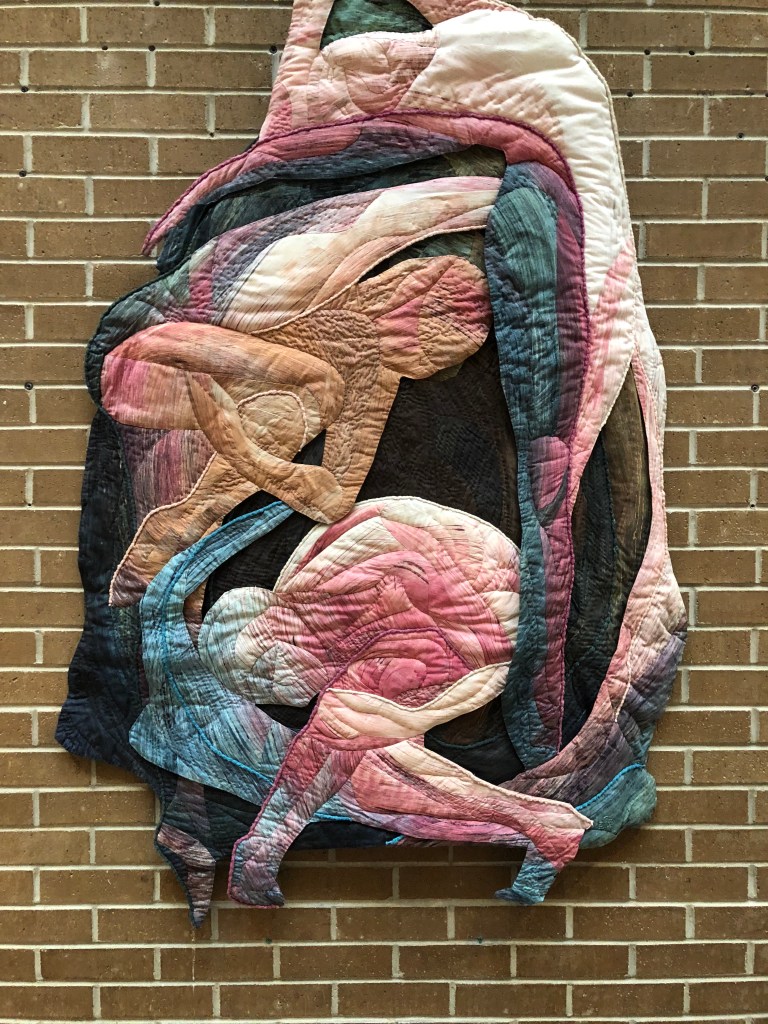
Brenda Bunten-Schloesser
A Light

This is a compelling exhibition, which posits the transformative potential realized by imagining the creative inherent in the common. Thanks to Alex Gregory and his staff for designing a quality show that is worth multiple visits.

October 17, Cerulean Gallery of Amarillo hosted an exhibition with a portion of the proceeds benefiting High Plains Public Radio.

Chief among the works displayed were several paintings by Amarillo Mayor Ginger Nelson, who, in an artist’s statement, notes that she paints passionately, spiritually and avocationally. An artist/mayor certainly personifies an artsy Amarillo!

Ginger Nelson

One other painting among many worthy of mention is Near Neptune by Edward Cavasos. This Botticelliesque creation has a haunting pallor whose blood-red eyes long for love and acceptance.

Edward Cavasos
Near Neptune

October 19 was the first day of Fall Foliage Festival at Canadian, Texas, which mandated a pilgrimage to the Citadelle Art Museum.
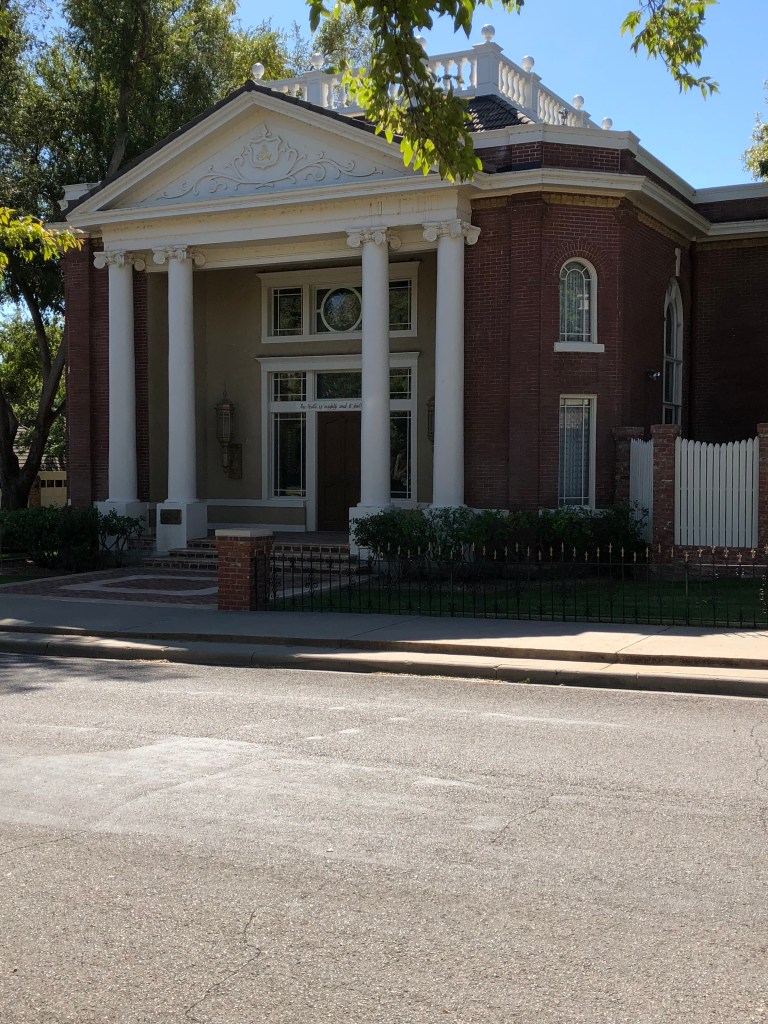
The Citadelle Art Museum
Canadian, Texas

The old First Baptist Church was repurposed by Dr. Malouf and Therese Abraham, first, as a family home, then as a venue to showcase their lifetime of artistic acquisition.

A separate pavilion houses temporary exhibitions, the current entitled Out of the Blue: A Tape Art Experience. This work, created by artists from the Rhode Island School of Design, depicting the degree to which digital domination defines our lives, is organic as well as ephemeral.

Tape Art
Work in Progress

As soon as it’s finished, it’s ripped down, which the artists say they find thrilling. Go figure!

It’s always a pleasure to visit the permanent collection as well as the old home place, which has an aristocratic ambience combined with Texas friendly.
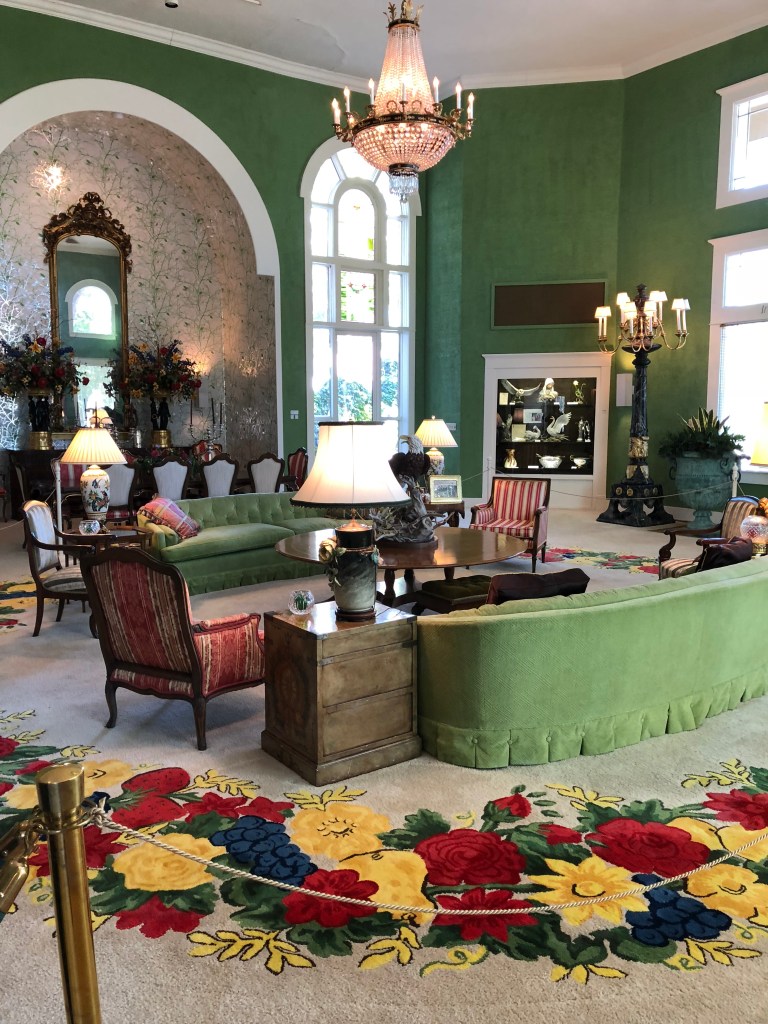
Interior: The Citadelle
Norman Rockwell
Permanent Collection
The Citadelle
J. C. Leyendecker
Permanent Collection
The Citadelle

A fourth exhibit is worth noting: Dia de los Muertos by Amarillo College art students had its opening on Halloween in the Commons Gallery at AC.

Of course, expectations are that young artists from Hispanic backgrounds would most fully portray the impact of this celebration.

This yearly exhibition demonstrates that non-Hispanic students, thanks to guidance from gifted instructors like Professor Steven Cost, are able to intuit another cultural reality and express this event from their own experience. An example of this cross-cultural appropriation is Thriller de la Muertos by Michael Sebastian.
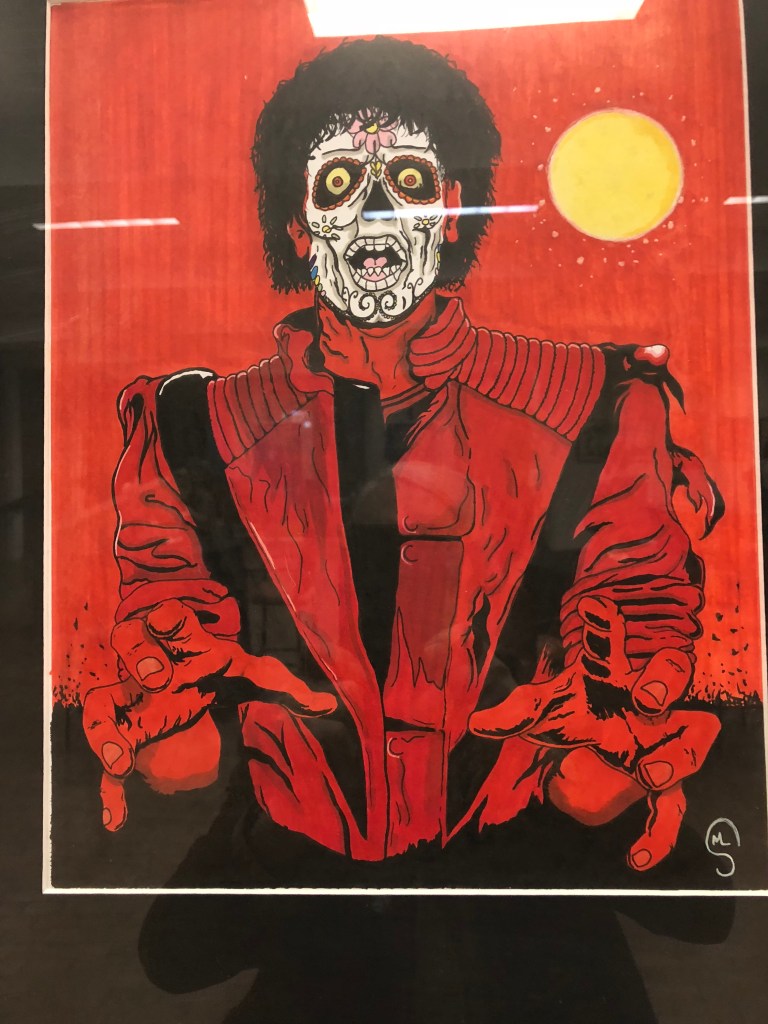
In the words of the artist, he was inspired by the day and John Landis’ depiction of Jackson “for a fun and interesting mash-up of pop culture and the Mexican holiday!”

A powerful work by Jeremiah Galan, entitled Refugio Cook Enriquez, portrays his grandfather, who first, loved his family with twelve children and thirty-five grandchildren. His next love was Nortena music, Ramon Ayala being his favorite musician. If this young artist’s talent is not professional grade, it is muy proxima!

Roberto Galan
Refugio Cook Enriquez


Celeste Ramirez, in Our Ancestors, portrays the essential cultural conviction that we are each the embodiment of all of our ancestors. She therefore painted herself in traditional festive dress, bedecked with Dia de los Muertos flower petals, as she summoned forth her ancestors.

Celeste Ramirez
Our Ancestors

With such quality art, displayed in concurrent exhibitions, it’s easy to say, “Keep Amarillo Artsy! Keep Austin Weird! Keep Lubbock in the Rear View Mirror!!!”
Nov. 2, 2019: “Toward the South Plains” – CMA/FASO Concert, Oct. 12, 2019

Toward the South Plains
World Premier: Harlan Hodges
Chamber Orchestra, Choir, Organ
St. Andrews Episcopal Church

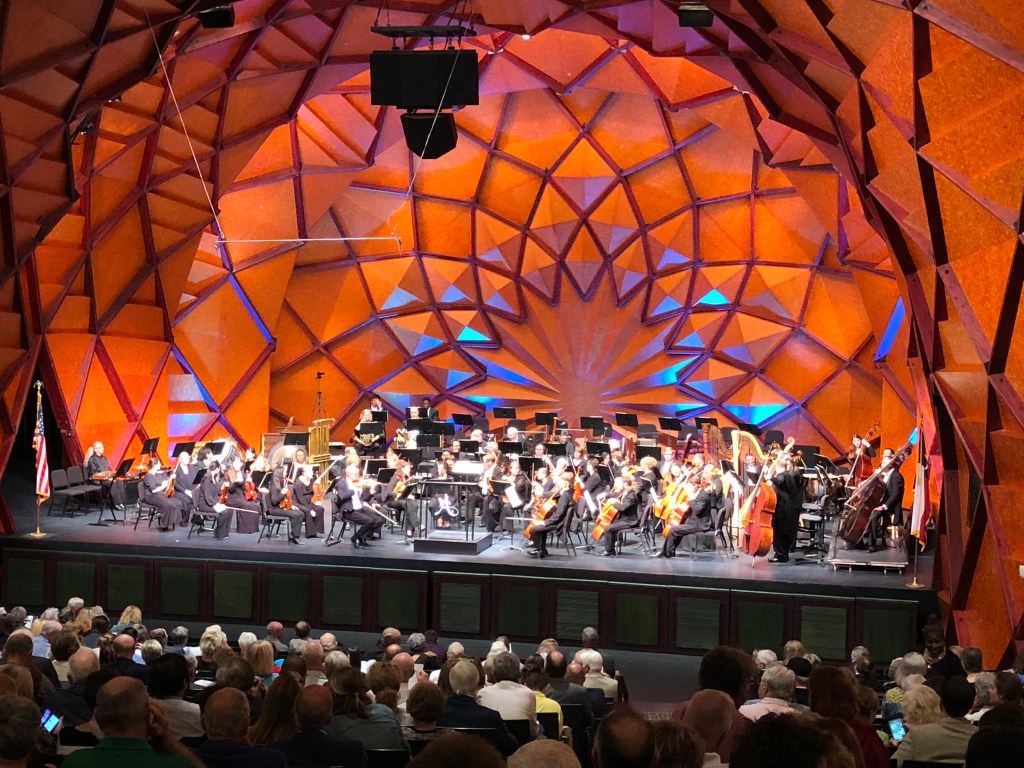
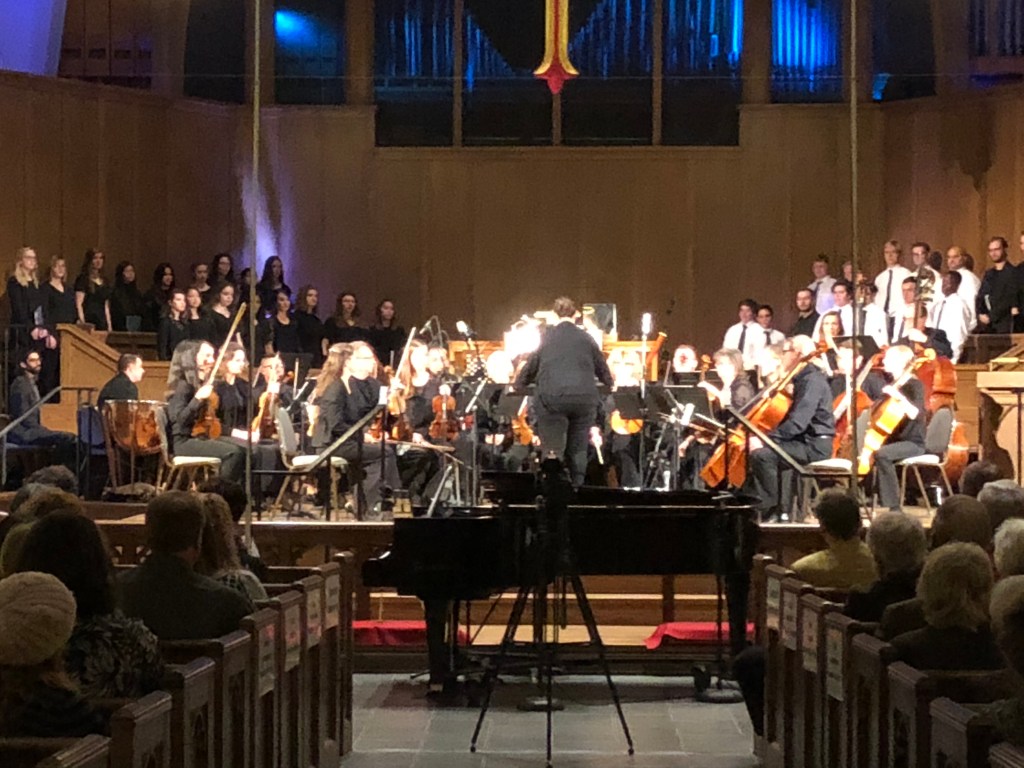
A full house gathered at St. Andrews Episcopal Church on October 12 to enjoy a combined concert of both Chamber Music Amarillo and Friends of Aeolian Skinner Organ society, which featured a world premier, one of the world’s finest performance organs, and, so the audience felt, a world-class performance!

A world premier, Towards the South Plains, by Harlan Hodges, albeit in abbreviated form, thrilled attendees. In addition, church organist Rick Land performed two Handel concertos and the Amarillo Virtuosi Chamber Orchestra played Sir Edward Elgar’s Introduction and Allegro for Strings. All of this right here in Cowboy Country!

Though purists tout Bach as the father of the performance organ, more contemporary critics extol the virtues of George Frideric Handel regarding his contributions to the instrument.

But Handel had what, by comparison, was only the most basic manual instrument on which to perform, a pale flame compared to the blue-white splendor of the 1024.

Rick Land demonstrated his talent as well as the capacity of the Aeolian-Skinner in two works: Concerto in b-flat major; Concerto in d minor. In the latter work, the composer encouraged organo ad libitum allowing the performer to free-style. And, in both selections, Rick Land pulled out all of the stops which vibrated the arches of St. Andrews Neo-Romanesque arches.

Dr. Mark Bartley
Amarillo Virtuosi Chamber Orchestra
Ovation after Elgar

Edward Elgar’s Introduction and Allegro was written in 1905 and premiered at an all-Elgar concert to showcase the artistry of the strings of the newly-formed London Symphony Orchestra. It comes as no surprise that the Amarillo Virtuosi played this work with facility and grace.

In the Moderato, a solo viola sings a tune, replicating a song the composer once heard in Wales. You know, the Welsh and their songs. The audience then heard, in the Allegro and the Allegro and Fugue sections, intertwining themes which build in intensity, with a solo violin restating the Welsh melody.

This is a rich piece of music, which, coming at the end of the program, was like an extra layer of icing on a German Chocolate Cake.

Harlan Hodges
Ovation after
“Toward the South Plains”

The occasion of the featured work is the essence of serendipity. The composer contacted David Palmer, artistic director of Chamber Music Amarillo, about premiering a work requiring chorus and a large orchestra. What David could ultimately offer was the orchestral capacity of the 1024, so Journey Toward the South Plains had its awakening.

In the words of the composer, this work is a journey of body and spirit, a literal and figurative journey home which took place in February, 2016. What follows, as illustrated in the music, includes the life cycle of water, cycles of the moon, the transmigration of a soul, the stages of grief and the ever-constant presence of change in our lives.

In the words of this listener, JTTSP was a transcendent tone poem on the plains. In the words of another, this was more spiritual than anything she’d heard in church! And, though geographically the title designated the South Plains, the sound was pure Panhandle.

And the chorus: young adolescent to young adult, singing confidently in several tones and tongues! Credit Elizabeth Manfredi for prepping her Bonham Middle Schoolers like seasoned professionals.

And the music was both powerful and impactful, and, for those who live on the plans, a sonic depiction of the land we tread and the air we breathe. Even the work’s dramatic dynamics are imminently relatable to life’s abrupt changes in these parts: witness the recent January weather in October.

A bassoon duet especially stood out in the score. More accurately, this was a sustained soliloquy, which seemed continuous, without perceptible breath breaks!

A world premier, Handel organ concerti, and Elgar: a rich cultural combination was offered up to an audience out here on the Texas high plains. Our thanks go to Harlan Hodges, Rick Land and Dr. Mark Bartley, and special thanks to David Palmer and St. Andrews Episcopal Church.

Their efforts make it easy to say, “Keep Amarillo Artsy! Keep Austin Weird! Keep Lubbock in the Rear View Mirror!!!!”

October 26, 2019: Mary Moody Northern Recital Hall Rededication Concert

Though the title of the program sounded like a religious revival, a celebration of sound was more apt. For this event exulted in Northern Recital Hall’s upgrade to become the world’s leading variable acoustical space.

In fact, Dean Robert Hanson introduced the new hall as the star of the show and hoped the audience enjoyed its performance. Almost on cue, panels of speakers and sensors aligning the walls whirred and adjusted, Star Wars like, to the first number, and continued that process each time a new group of artists came on stage.

And the result was heavenly! Perhaps the association with the spiritual isn’t that far off.

A few of the eight performances, each chosen to highlight the new sound, are mentioned here.

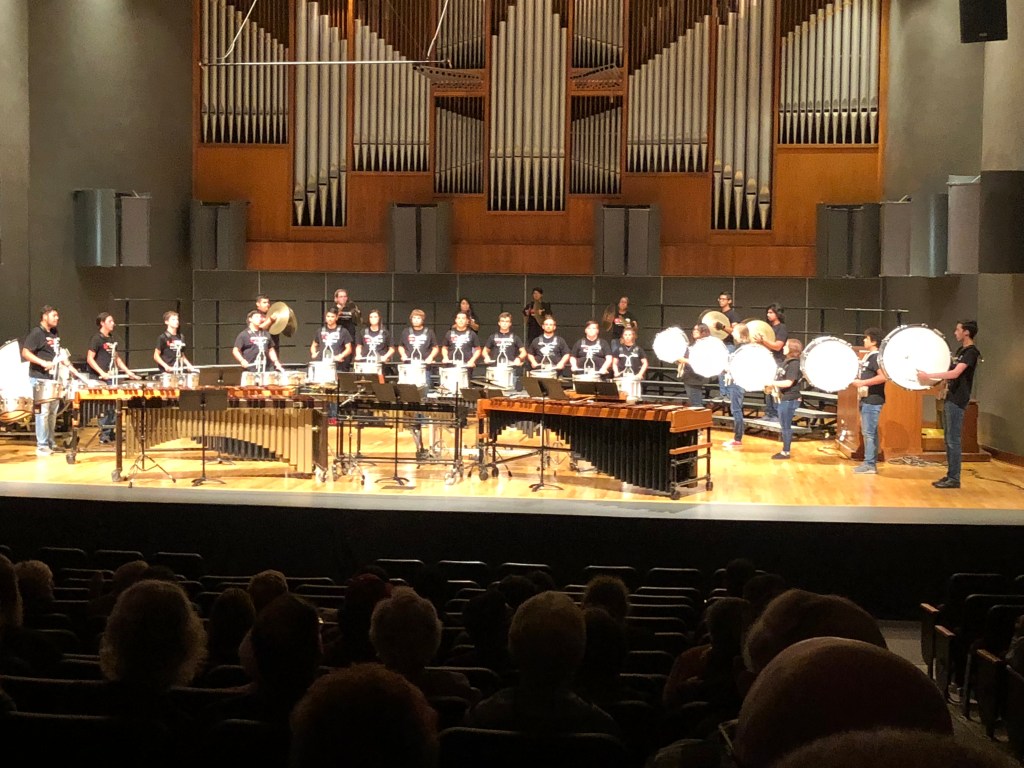
Buffalo Marching Band Drumline

The Drumline of the Buffalo Marching Band got everyone’s attention in providing a pure percussive soundscape, which utilized all types of struck-sound with each one distinctly heard.

University Chorale

The University Chorale performed works by Brahms, Hagenberg and Brown. The piece that most fully actualized the partnership between the new technology and the performers was Hallelujah by William David Brown.

This choral song is dramatic with a strong, assertive male opening, then joined by the ladies to become sustained variegations of the word “hallelujah.” This was another attention getter, with the hall only accentuating the incredible vocal meld and pulsing dynamics.

MaryAnn Kyle
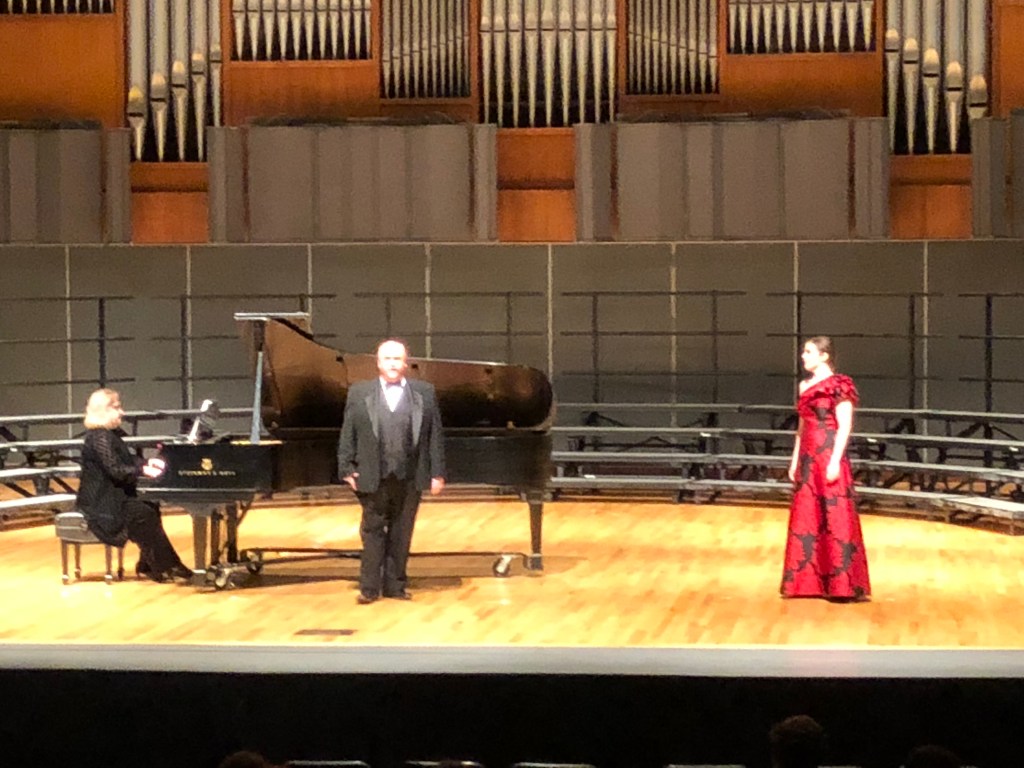
Habanera from Carmen

MaryAnn Kyle, mezzo from Mobile, sang Habanera from Bizet’s Carmen with Mila Abbasova accompanying. Ms. Kyle sang the serial seductress to perfection, sashaying into the audience to bewitch and beguile a captive male audience. The hall could well face indictment as an accomplice for Carmen’s crimes of the heart.

Sarah Beckham-Turner
Matt Oglesby
Wagner: Gotterdamerung

Wagner resists clarity, but the hall enabled Sarah Beckham-Turner and Matthew Oglesby to sing a Brunnhilde/Siegfried duet from Gotterdamerung with complete intelligibility. We can’t wait to hear Lady Sarah and her Opera Cowgirl cohorts perform The Ride of the Valkyries on this stage.

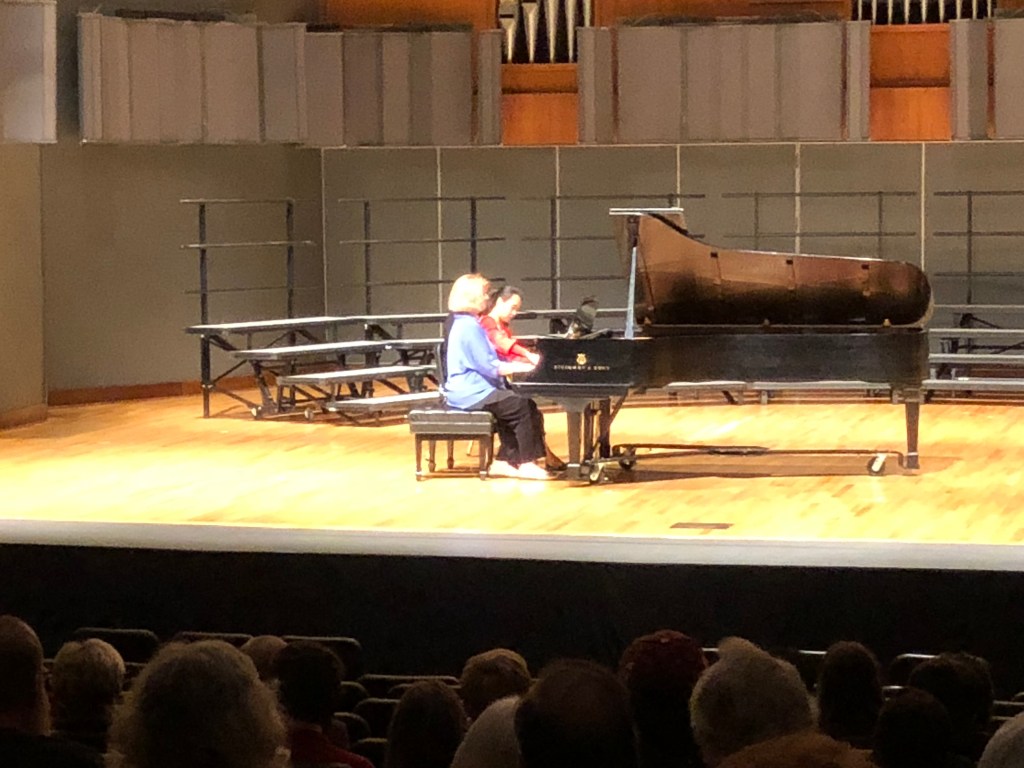
Choong-ha Nam
Denise Parr=Scanlin
Brahms Hungarian Dances

Choong-ha Nam and Denise Parr-Scanlin performed the digitally-complex, as in fingerings, four-handed version of two Brahms Hungarian Dances. The hall enabled the artistry of these puissant pianists to coalesce with the full potential of the Steinway sufficient for the audience to hope for a return engagement. Soon!

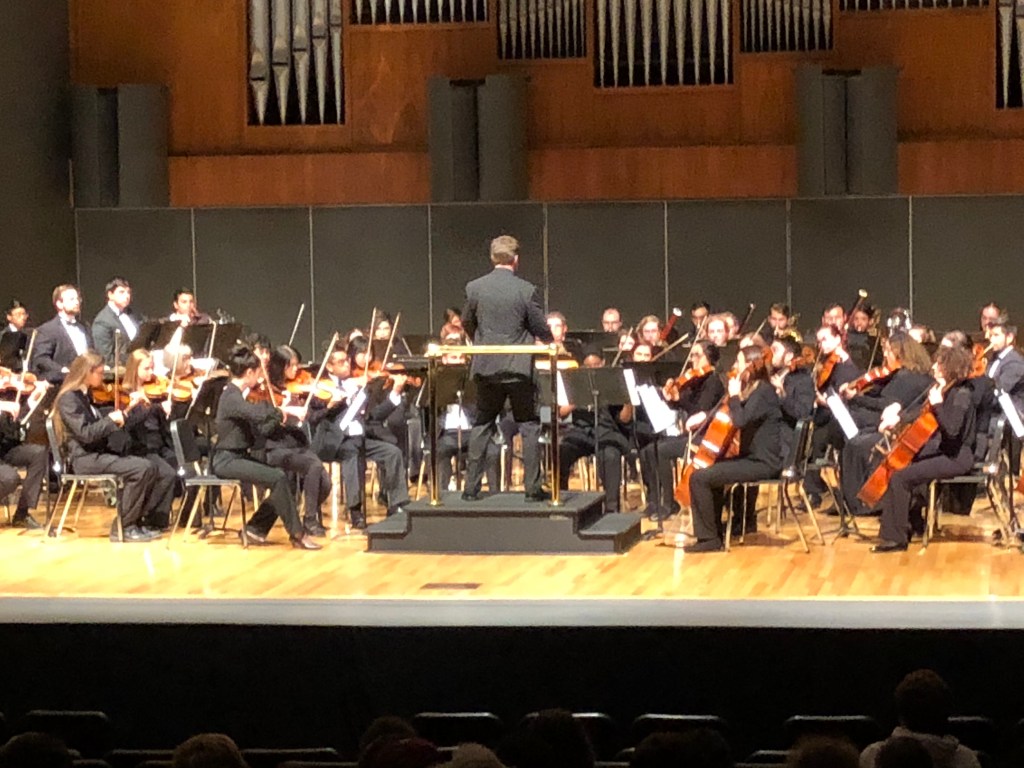
WTAMU Symphony Orchestra

Dr. Mark Barley and the WTAMU Symphony Orchestra played two significant works, the first being Solemn March for Tsar Alaexander III’s Coronation, by Tchaikovsky.

This piece, performed at the dedication of Carnegie Hall, is noble, brassy and majestic, which, like the 1812 Overture, concludes with the Russian National Hymn.

The second was an orchestral premier, entitled Pathway to Polaris composed by B. J. Brooks. The theme of the composition, according to Dr. Bartley, is a version of Ein Heldenleben, which, in this case, is a student’s journey in becoming greater than oneself in reaching for the stars.

Both of these works, as amplified and tweaked by the hall, enfolded the audience in aural ecstasy.

No one involved with Northern Recital Hall can envision its impact on both artists and the arts. Gratitude that goes beyond mere words is extended to the university’s and School of Music’s administration for the vision of allowing alum Jay Perdue and Perdue Acoustics the opportunity to create the most acoustically advanced auditorium in the world!

With this feature, it ain’t braggin’ to say, “Keep Amarillo Artsy! Keep Austin Weird! Keep Lubbock in the Rear View Mirror!!!”
October 21, 2019: Amarillo Opera Die Fledermaus

Just Across the Street
From
Die Fledermaus
Only in Amarillo!

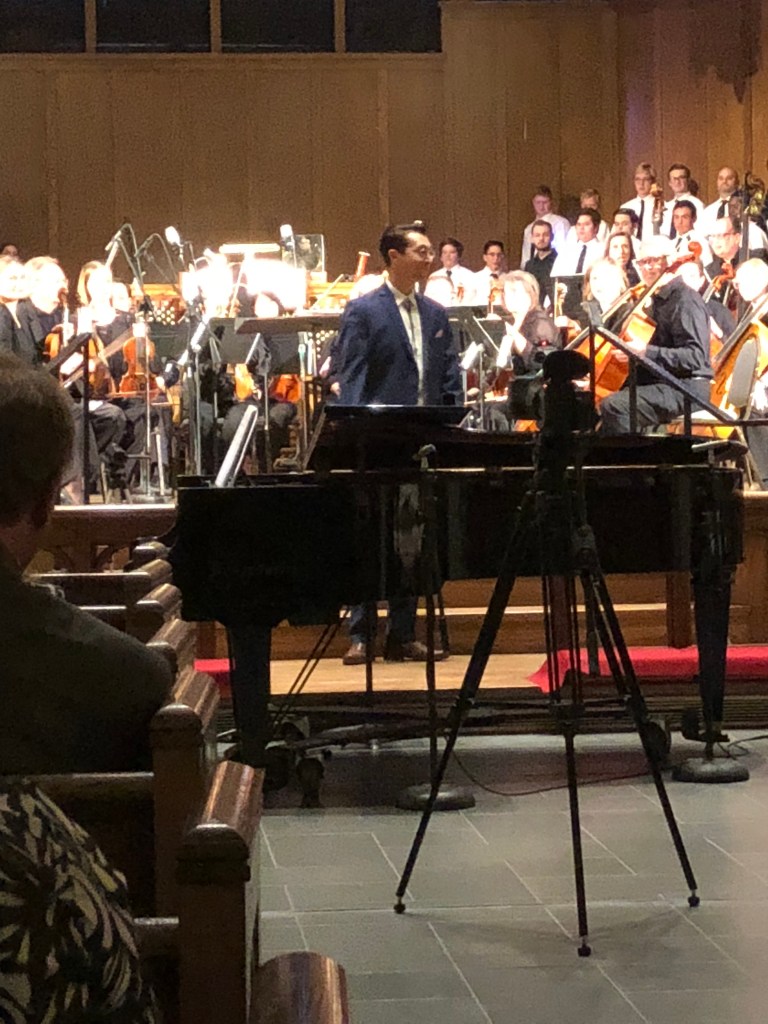
Nothing better illustrates the magnum mysterium of the fine arts in Amarillo than contiguous events on October 5. As the Globe News Center staged Die Fledermaus, the Civic Center, across the street, hosted the World Championships of the Working Ranch Cowboys Association Ranch Rodeo!

Nowhere in the country could one find such a contrast in cultures. Yet, this wasn’t just a one-off event but rather illustrative of an ongoing reality: the ultimate in fine art coexisting with real-deal cowboys.

After a year in financial limbo, a redirected and reinvigorated Amarillo Opera performed Die Fledermaus by Johann Strauss. This final iteration of “The Bat” represented quite a multi-stage and multi-national evolution from the original, Die Gefangnis, “The Prison.”

Within twenty years of its 1874 premier, this opera buffa found acceptance at the leading theatres in the world.

Truth be told, even aesthete culture vultures like to laugh. And what better way for Amarillo Opera to find a new place than through audience member’s funny bones?

All the stars certainly aligned for this work. If opera is the ultimate performance art, comic opera, despite the disdain of purists, raises that bar. The requirements for humor far exceed bellowing Bell Canto, and include nuance, chemistry and timing. And all of the combustibles compounded to ignite a 10 on the stage of the Globe News Center!

Much of the credit accrues to Director Dean Anthony, who enabled the cast to fully actualize their characters. And, he did a credible job self-directing himself as the inebriated Frosch.

The leads, Angela Turner-Wilson as Rosalina, and Weston Hurt as Eisenstein were believable in their dissembling and deception, whether it was to self, spouse or society.

Their voices coalesced beautifully, each complimenting the other. This quality permeated the whole cast which projected both blend and balance.

Amarillo’s own (we can claim him now) Eric Barry played Alfred, actually more of an Alfredo, who has twin loves: Rosalina and his own voice. On stage he he evinced a charming buffoonery as he tried to beguile Rosalina, while his offstage tenor was clear and thrilling.

Abigail Krawczynska, as the maid Adele, managed the perfect sob-fest to get her way, which resulted in her acting as an actress. Her feigned outrage at being mistaken for her true self in the aria My Dear Marquis was layered with all sorts of operatic icing.

And a trouser role, right across the street from barrel-racing! Cara Collins played the bored Prince Orlofsky, who names, among a whole litany, this very opera as his chief cause for boredom!

Cara sounded Russian, and Angela, posing as a Hungarian countess, sang like she’d just come from the salons of Budapest. Weston, and Adelmo Guidarelli, who played the jailer Frank, failed utterly as poseurs sounding French. But faux Francais was in the script.

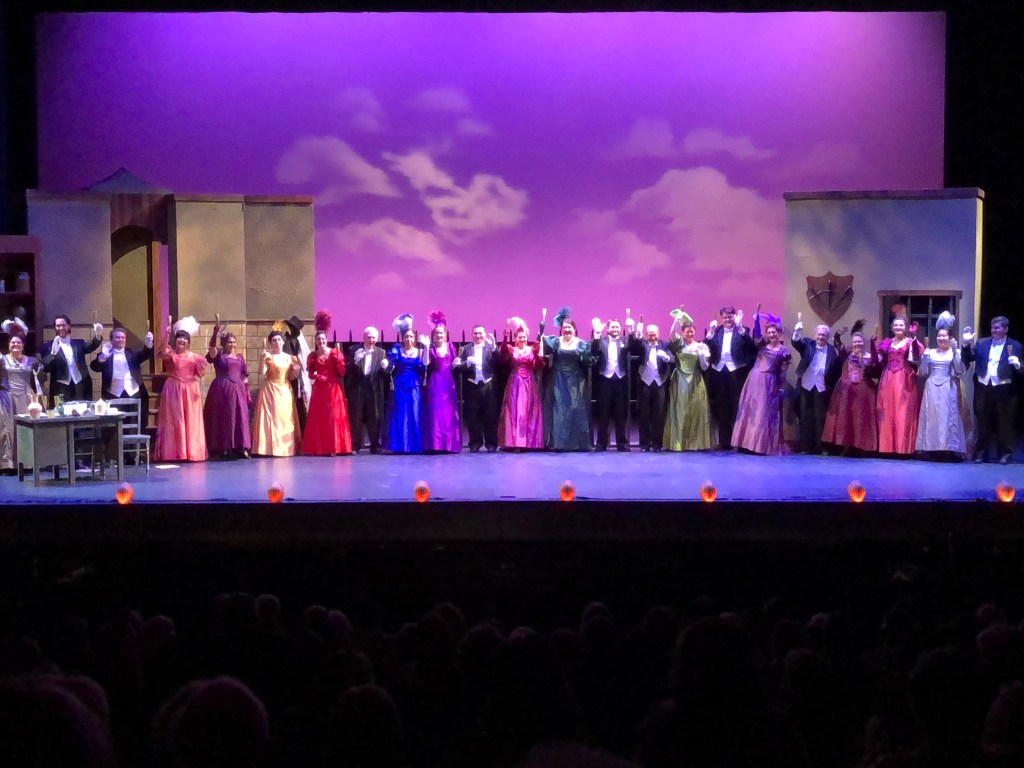
Curtain Call
Die Fledermaus
Globe News Center
Oct. 5, 2019

If laughter is the best medicine, then Die Fledermaus was just what the doctor ordered for a clearly recrudesced and recovering Amarillo Opera.

The citizens of Cowboy Country can be justly proud of this organization, capable of producing such quality grand opera. And, congratulations to General Director Mary Jane Johnson, and the cast and crew for a performance worthy of much bigger metropolitan stages.

Amarillo Opera is but one more reason we can say: “Keep Amarillo Artsy! Keep Austin Weird! Keep Lubbock in the Rear View Mirror!!!!”

October 14, 2019: Amarillo Symphony, September 21

The Amarillo Symphony
September 21, 2019
Globe News Center

The Amarillo Symphony inaugurated its 95th season with a world premier, and three roughly contemporaneous European works whose further connection is a matter of conjecture. Maestro Jacomo Bairos conducted.

Chris Rogerson, currently on the faculty at the Curtis Institute of Music, as well as advisor to Amarillo Symphony, was its former composer-in-residence. His impressive list of commissions include major symphonies as well as well-known ensembles. In addition, he boasts quite a pedigree of pedagogues, including Jennifer Higdon and Michael Tilson-Thomas.

The Symphony appropriately heralded the evening’s program with Fanfare, a short, but attention grabbing work announced by brass bravura. It does remind one of Copland’s Fanfare for the Common Man, which remains popular. May Rogerson’s work do likewise, but we can always say, ‘We heard it first!’

The second work, Tchaikovsky’s Violin Concerto in D major, was written in 1878, at Lake Geneva while the composer was recovering from a disastrous marriage. The aerobic virtuosity required by the soloist, as well as the work’s inherent Slavic bias forestalled its premier until 1881, when it received mixed reviews. Now it is one of the Russian’s most played works.

The soloist for this work, Jennifer Koh, definitely moved the needle on the voltmeter. Most visibly, her coiffure literally vibrated from the frenetic energy of her performance. Her input only enhanced the emotional roller-coaster that attends this piece, leaving an appreciative audience in awe. Besides the prolonged standing ovation, Ms. Koh certainly earned a cheeseburger for her exertions!

The third work of the evening was Debussy’s Prelude to the Afternoon o f a Faun. Again, the perceived conservatism of this area belies the courageous embrace of the arts, irrespective of content.

Though the music premiered in the 1890’s, portraying Mallarme’s poem which celebrated unhindered sexuality, the cultural counter remains relevant.

The orchestra responded to the interpretive dynamics of Maestro Bairos to engage the audience in an aural rainbow. The interplay of woodwinds, especially, created a tension and soundscape worthy of Debussy aficionados anywhere on the planet.

Finally, who was the greatest Russian composer? Why Alexander Scriabin. Just ask him.

Like Einstein, attempting to resolve a unified field theory, Scriabin, with psychotic hubris, proposed a grand musical work to provide the listener with total cosmic comprehension. Messianically, towards that end he composed the Poem of Ecstasy.

A major characteristic of this work is a lack of tonal resolution aligned with an arrhythmia which corresponds to the Genesis description of creation without form and void.

Two dynamic resolutions exist, which leave the work open to various interpretations, ranging from the sexual to the spiritual. Needless to say, it ain’t dull!

It’s hard to find a common thread twixt these last three works unless one goes baseline and primal. Perhaps it’s just the fact that all three could be called contemporaries.

Regardless, the Amarillo audience was able to judge this music on its own merits, which were impactful and transporting, and in one instance, a world premier.

Congratulations to the conductor for his choices, and to all of the performers for stepping up to the musical plate.

Works of this quality, right here in Cowboy Country, are one reason we can proudly say, “Keep Amarillo Artsy! Keep Austin Weird! Keep Lubbock in the Rear View Mirror!!!”
October 5, 2019: “Legally Blonde” and “Songs For a New World”

The opening week of the Amarillo Arts Season featured not one, but two musicals: Legally Blonde, which had a three weekend run on ALT’s mainstage, and Songs for a New World which showed for two weeks at WTAMU.

Curtain Call
Legally Blonde
ALT Sept 13

Many cliches are almost apt for Legally Blonde: stereotypes on steroids; girly and garish; simultaneously pink and powerful.

This play is the product of playwright Heather Hach, with music and lyrics by Nell Benjamin and Laurence O’Keefe and drawn from the original novel by Amanda Brown as well as the motion picture.

The precis of the performance is sorority girl Elle Woods, dumped by fantasized fiance Warner because she doesn’t align with his projected trajectory of greatness, follows him to Harvard Law School to win him back.

There, she digs deep in a revelatory odyssey that is actualizing and empowering, negotiating social and academic minefields along which a sequence of credible role reversals take place, including rejection of her former heartthrob, now suppliant and quasi-penitent.

The plot is complex, the sequencing intense and demanding, with many of the large number of roles requiring that trifecta of performance: singing, dancing and acting.

And where can Director Jason Crespin, Music Director Jennifer Akins and Choreographer Beth Alexander find that huge amount of extraordinary talent? Right here in Amarillo, Texas!

It’s possible to note only a few of huge cast, chief among whom is Elle, played by Terry Martin, a West Coast theatre and screen veteran whose stage credits attest to the omnicompetence of her talent spectrum.

Leigh Anne Crandall played Paulette the hairdresser, whose Bostonian southside accent sounded systemic, who intuits and embraces the inner Elle.

The most complex character arc is in Vivienne, played by Amber Spaulding, who morphs from snobbish social climber to sincere social activist.

Ryan Sustaita, in contrast to the jerk jock he played in Heathers, is patient, kind, attentive and genuine, everything Elle’s ex wasn’t.

Patrick Swindell, locally recognized arts afficionado and patron, played the puissant and profound Professor Callahan, whose feet of clay become crucial to Elle’s empowerment.

And let’s not forget the pawformances of Bentley and Maverick who totally captured their canine characters, as well as the hearts of the audience.

This show had pace and punch, and a pool of talent consistent with far larger metropolitan areas. But wait: the stage still beckoned the first week of the arts season.

The second play was staged by the WTAMU Theatre Dept. at the Happy State Bank Studio Theatre.

Curtain Call
Songs for a New World
WTAMU – Sept 14

Songs For a New World, originally produced by the WPA Theatre in NYC in 1995, was created by Jason Robert Brown, who also composed the music.

The production staff was larger than the cast of ten, who multi-tasked their many roles with facility, like the director Bradley J. Behrmann who also played piano.

The audience enjoyed a dinner theatre ambience with couches and drink tables facing a stunning stage designed by Brock Burton.

The play/musical’s premise is about leaving the comfort zone and braving the unknown, whether physically, emotionally or spiritually.

The costuming, super casual chic, was incidental to the profound and poignant messages in the music, with only a few of the nineteen numbers noted.

The second ensemble takes place on the deck of a Spanish ship in 1492, literally bound for a new world. Rejene Phillips belts out a powerful message about racial equality in The Steam Train.

Adam Hainsel and Lauren Landtroop, the latter in a part so different from Heathers, sang a moving duet about a divorced couple contemplating reconciliation in I’d Give it All for You.

Finally Cynthia Morin offered a stirring performance in Flying Home, about that new world all face as we leave this mortal coil.

All of the elements of the production, whether it was the actors, directors, stage, crew and musicians, moved flawlessly like the many parts of a Rolex. Small wonder that the Theatre Department has entered this work in the Kennedy Center American College Theater Festival.

The Panhandle cultural arts area extends ‘Break a Leg’ wishes.

Because of the prevalence of both provocative as well as major plays throughout the season, Amarillo area theatre goers have access to national-class stage.

That theatre is only one facet of the gem that is the Amarillo arts scene, we say, at the start of this arts season, “Keep Amarillo Artsy! Keep Austin Weird! Keep Lubbock in the Rear View Mirror!!!”

Sept. 24: Chamber Music Amarillo – Sept 12, 2019

Korenchuk, Bishop, Tan
Perform
Elizabeth de la Guerre
CMA-Sept 12

Friday the thirteenth was a lucky day, a Good Friday for the arts in Amarillo. Not only did it mark the opening week of the Arts Season, but it also was the opening concert for Chamber Music Amarillo’s 2019/2020 year.

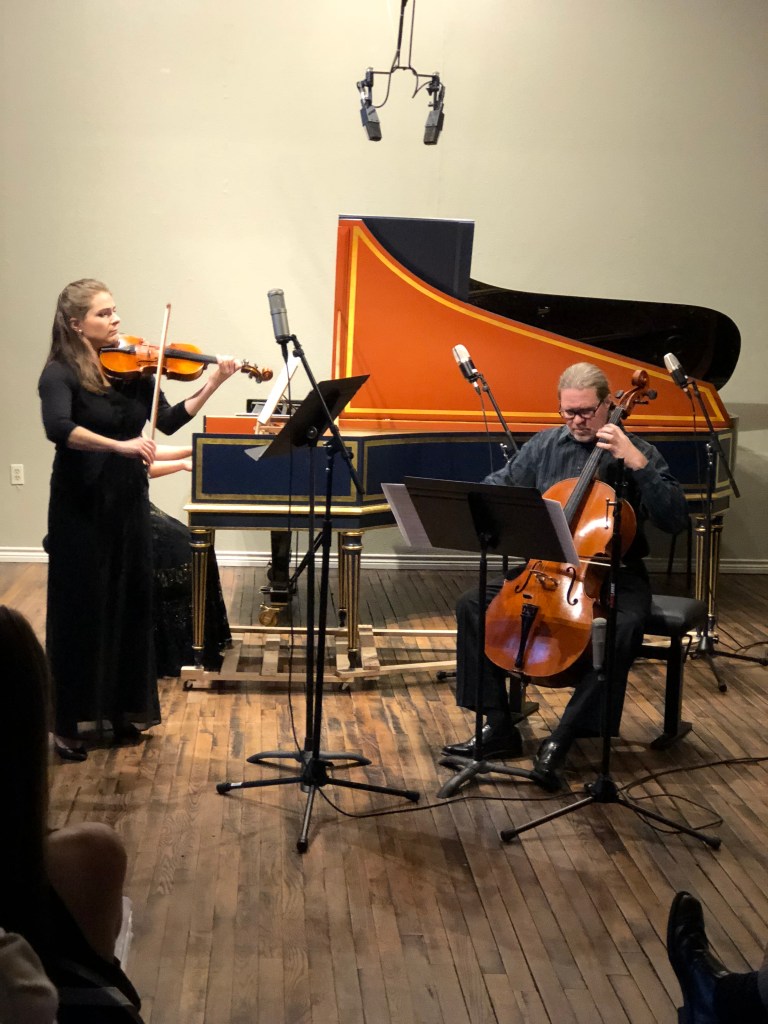
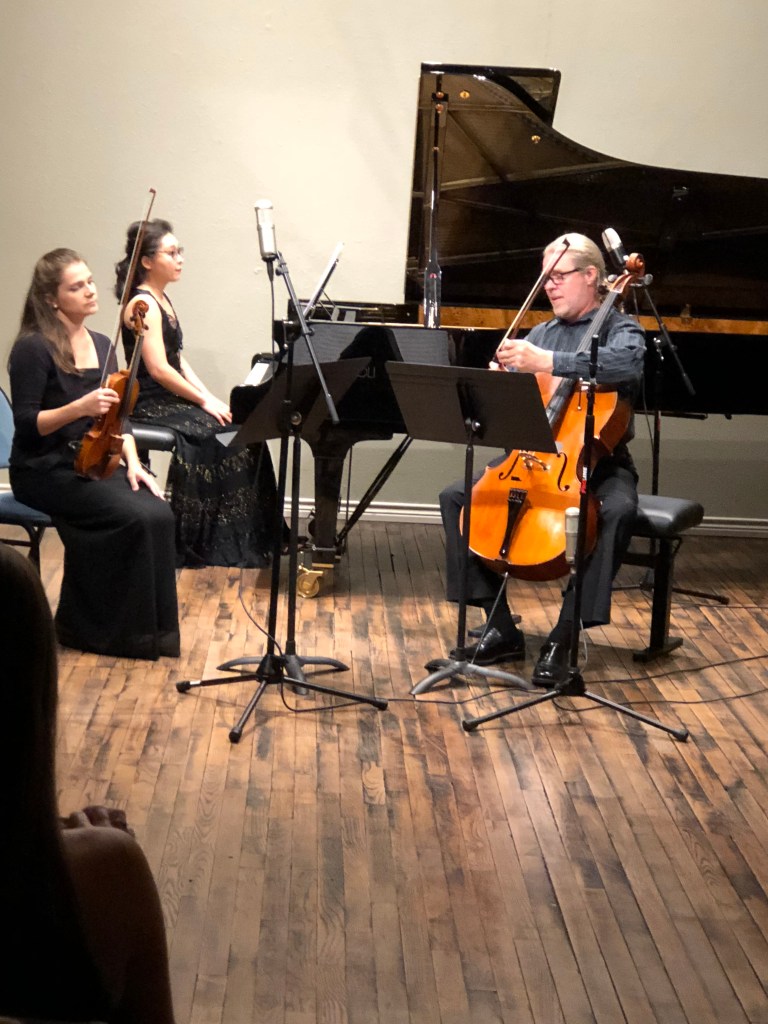
The theme was “Celebrating Women in the Arts,” and a crowd of about one hundred heard works of Elizabeth de la Guerre, Amy Beach and Fanny Mendelssohn Hensel, played by violinist Natalia Korenchuk, cellist Jayson Bishop and Lucy Tan on both piano and harpsichord. Dr. Kimberly Heib and Greg Rohloff joined the artists in a pre-program talk.

Ain’t these purdy!
Fazioli 278 Grand
Kevin Fryer Op. 24
Harpsichord

CMA has to be one of the few, if not the only organization in the country to possesss both a 24 and a 278! Pretty damn impressive for Cowboy Country!

The first works on the program were Sonata No. 2 and Sonata No.1 for violin and continuo in d major by Elizabeth de la Guerre, 1665 – 1729. The composer, because of her performance ability, was accepted into the court of Louis XIV with the Marquise de Montespan, the reigning royal mistress overseeing her instruction (See Versailles on Netflix-informative but naughty!).

Though she composed in a variety of forms, her first published work was a book of harpsichord compositions. She would also become the first Frenchwoman to compose an opera, Cephalus and Procris from Ovid’s Metamorphoses.

Her work, in many ways typical of late Baroque, embraces a harpsichord obligato, allowing the artist considerable performance latitude, imparting a flowery ornamentation. It makes it easy to imagine an appreciative audience of bewigged, cosmetically-burdened aristocrats in Parisian salons.

In the opening Presto the violin opens with a cello answer, the harpsichord providing ongoing background. Guess that’s why it’s termed continuo. The dialogue between the strings made this listener wish for more from the harpsichord, but this otherwise glorious instrument doesn’t do dynamics very well.

The Sonata no. 1 has three Prestos, which, curiously, exhibit more of an Andante character, becoming at times almost morose. Perhaps the composer is inferring that all is not sweetness and light under the reign of the Sun King.

The third number before intermission was the Piano trio in a minor by Amy Beach, the first American female composer of large ensemble music, and the first American composer not to have European training.

In fact, a cursory reading of her richly-lived life proves again that truth is stranger than fiction. She certainly broke the glass ceiling in her lifetime, becoming well-respected both in the US and in Europe.

In the Adagio, Beach shows the strong emotional content and surging dynamics characteristic of the Romantic movement. In the Lento the composer snaps out of her reverie, a feeling fully expressed in the Allegro.

In other words, Amy Beach, and the three artists performing her work take the audience on an emotional roller-coaster which winds up in a happy place.

Prior to Performance
of
Fanny Mendelssohn-Hensel

The Amarillo area has witnessed a Renaissance of Fanny Mendelssohn-Hensel the last two years, with various works both at WTAMU and CMA.

Long in the shadow of her brother Felix, Fanny’s prodigious skills in both performance and composition are now recognized. She composed more than 460 works, the Piano Trio being her last. Prevailing social norms militated against publication in her own name, although some were published under her brother’s name and others pseudonymously.

An arpeggiated piano opening is joined by the violin and cello in the introduction of the Allegro molto vivace. The composer’s obvious instrumental preference is confidently asserted by pianist Lucy Tan, whose dynamics are not inhibited as when playing the harpsichord.

The Andante expressivo is deliberate, in contrast to the energy of the first movement, whereas the short Lied is wistful.

The Finale opens with a protracted piano solo which becomes almost a soliloquy, though, when joined by the strings, this movement becomes increasingly active, robust and complex, a good profile of the composer’s oeuvre.

What a splendid first Friday of the Arts Season! And all right here in what is the geographically-largest cultural arts district in Texas. Yee-Haw!

Our thanks to the incredible David Palmer, artistic director of CMA, whose efforts frequently turn the fine arts spotlight on Amarillo, and for the sponsors and musicians for making the unexpected in the arts just part of we in Amarillo have come to expect.

With the same assertion that Lucy Tan played the Fazioli, we say, “Keep Amarillo Artsy! Keep Austin Weird! Keep Lubbock in the Rear View Mirror!!!”
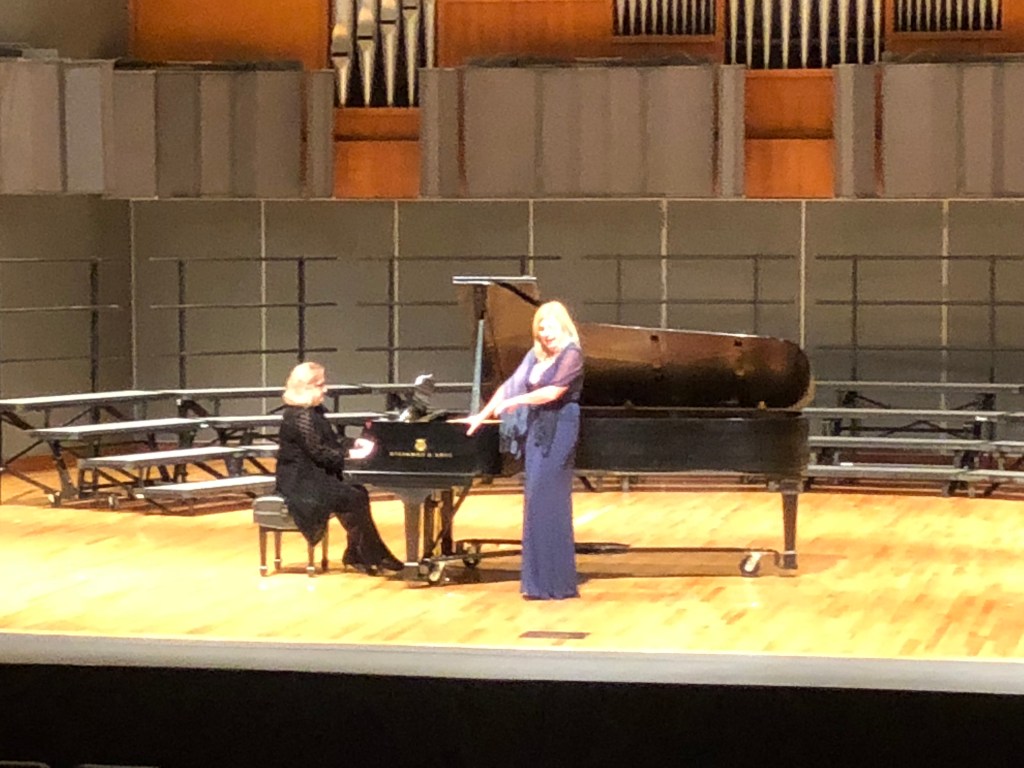
Sept. 20, 2019: The Ladd Lectures AMOA – Sept. 12

Dr. Richard Brettell
The History of the Louvre
The Ladd Lectures
AMOA & ACCHT
Sept 12, 2019

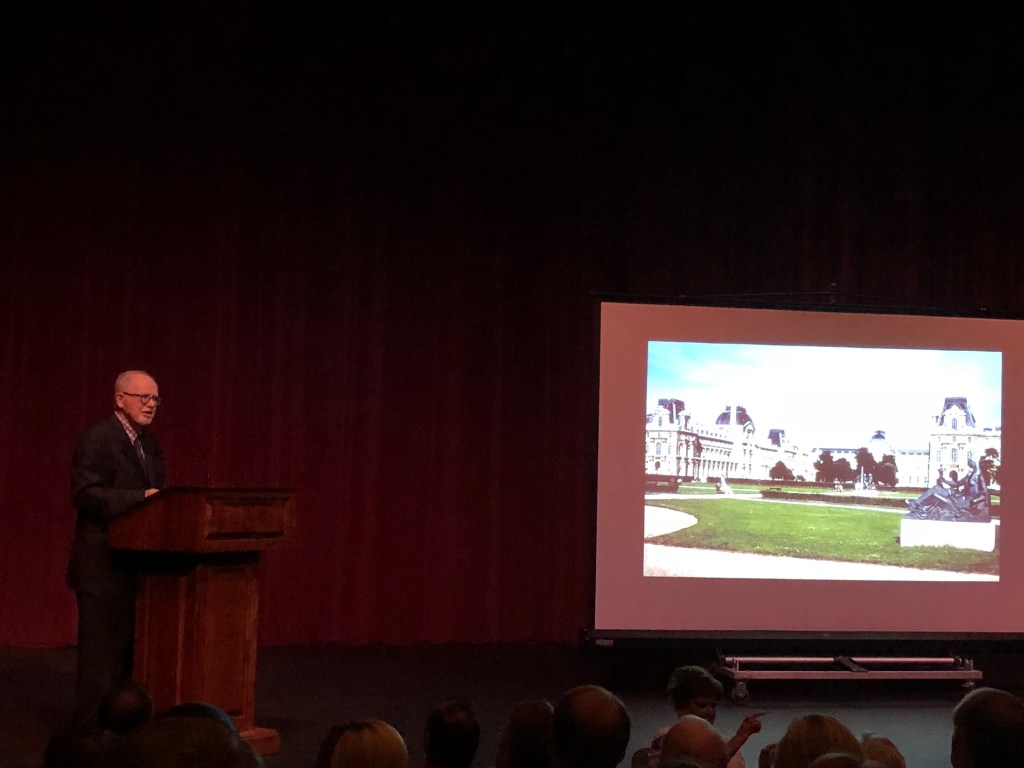
The twelfth annual Ladd Lecture was hosted by the Amarillo Museum of Art September 12 and featured Dr. Richard Brettell presenting a seven century history of the Louvre Museum. These lectures are sponsored by Peggy Ladd in memory of the late Frank Ladd and feature world-class authorities in the arts.

Richard Brettell, from the University of Texas at Dallas and with an extensive c.v, is in a class by himself. Yet, he is no stranger to Amarillo, this marking his third Ladd presentation.

Just imagine a combination of effortless articulate erudition punctuated by gossipy humor, a rare combination of comedy and culture, and you have an image of the esteemed professor.

A full house at the Amarillo College Concert Hall Theatre gathered to hear his presentation, in which he announced at the onset to depict the Louvre as a complicated palimpsest of buildings showing an architectural evolution over seven centuries. And, he kept the audience in rapt thrall as he waxed eloquently palimpsestic for an hour.

Some key facts were salient, at least to his listener, presented either as startling revelations or as whimsical arcana.

For instance, the modern Louvre dates to the Second Empire, when it became the epicenter of Baron Hausmann’s Paris renovation, who demolished slums in, yes in and around the museum. Renoir was a child in the Louvrian slum.

Prior to that, for two centuries the Louvre Palace was largely a ruin, with the showplace for art being the Palais Royale. In 1791, largely with art confiscated from the aristocracy and the Church, the Louvre opened as the first art museum in history and the prototype for American museums, democratically asserting that the enjoyment of fine art is for all.

The Grand Gallery began as a promenade for aristocrats and the idea for skylights arose from the gaping holes left when the roof tumbled down.

Finally Dr. Brettell took the audience through the life saga of Marie de Medici as portrayed by Peter Paul Rubens. Though some of the works are adulatory, overall the sequence does not tell a happy story.

A Thursday evening precis on the history of the Louvre and the famous Rubens paintings, out here on the barren plains of Texas: ostensibly strange, but, in the arts, very appropriate.

Our thanks to Peggy Ladd and her family for sponsorship, and to the hosts, AMOA. Because of such generosity and collaboration, exceptional artistic events are, in Amarillo, a common occurrence, especially during the arts season.

This makes it easy to say, “Keep Amarillo Artsy! Keep Austin Weird! Keep Lubbock in the Rear View Mirror!!!!”

Sept. 17, 2019: Duo Miroirs – AC Piano Series, Sept 10, 2019

Duo Miroirs
Antonello D’Onofrio
Claudio Soviero
AC Concert Hall Theatre
Sept. 10, 2019

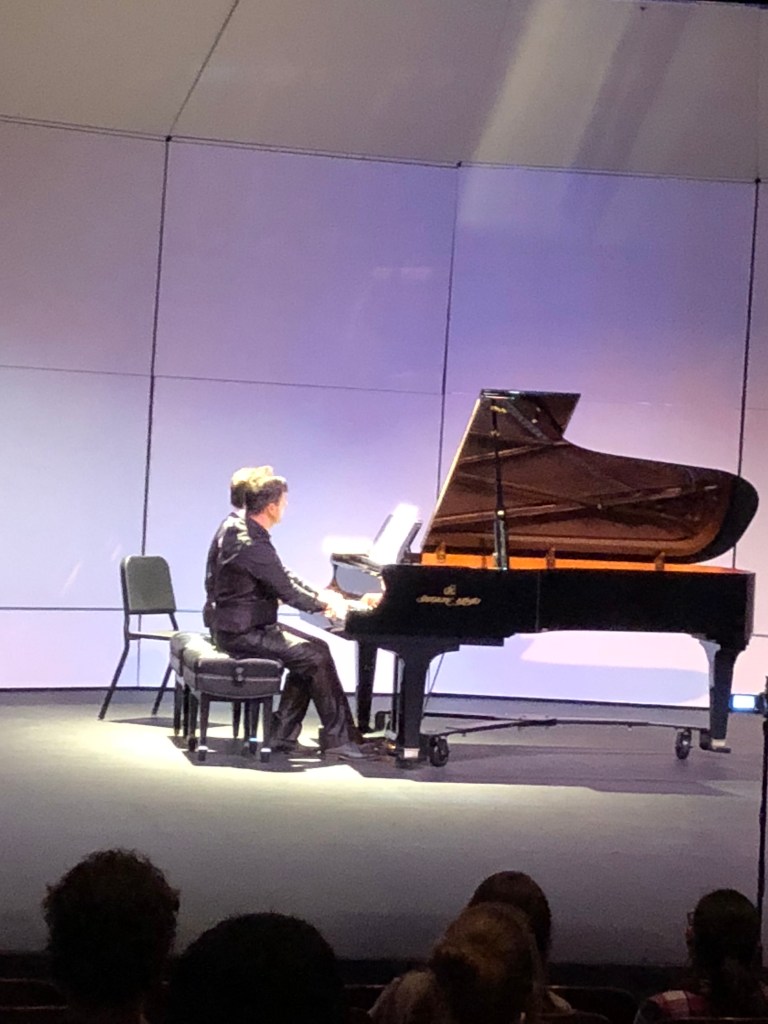
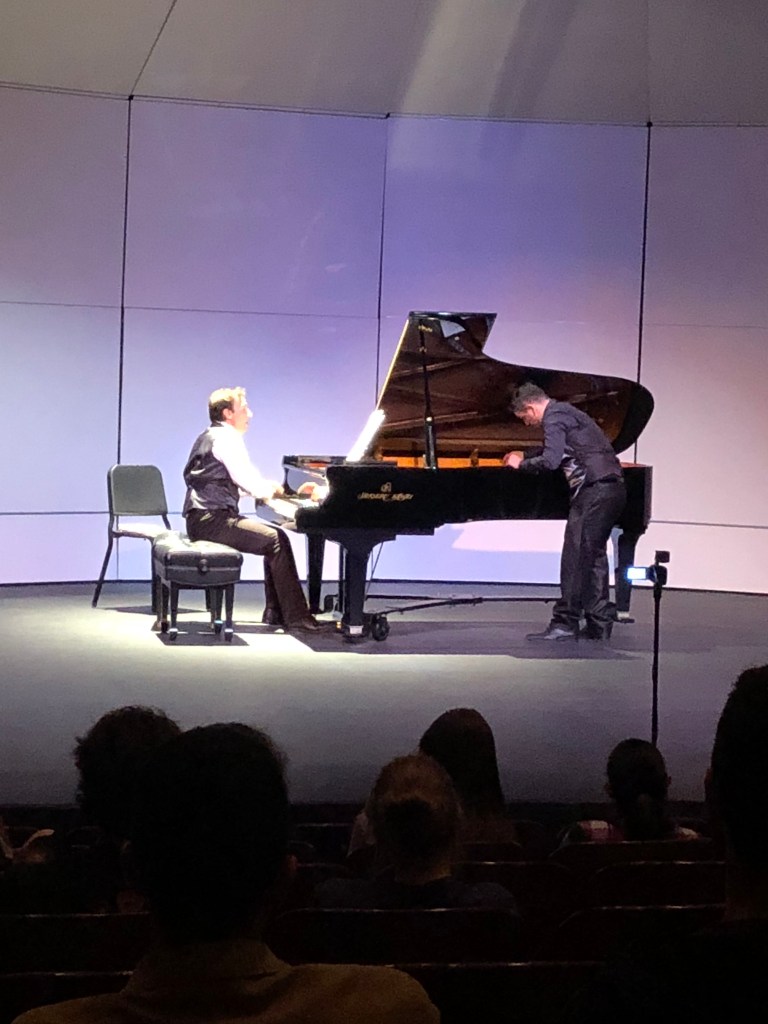
The Italian piano duo of Antonello D’Onofrio and Claudio Soviero initiated the Amarillo College Piano Series September 10 in the Amarillo College Concert Hall Theatre. These virtuosi, called Duo Miroirs, are based in Milan, and are recognized as one of the world’s outstanding four-handed piano duets.

A nice crowd was exposed to the magnificent potential of the Shigeru Kawai grand as these maestros from Milan demonstrated the instrument’s capacity under twenty fingers.

The first work, off-program but a nod to Beethoven’s 25oth birthday, was his Sonata Op.6 from 1797. This two movement piece, which had no immediate public performance, is thought to be a didactic device, since, at this time, the impecunious Beethoven had to accept students to make ends meet.

The number has a delightful, minuettish feel. Significant in the Allegretto is a three short note, one long note motiff which possibly foreshadows the most famous introduction in history from Symphony No. 5.

The second selection was Ravel’s Introduction and Allegro, which was originally scored for several instruments but in 1906 was recast for two pianos which Duo Miroirs obviously modified.

The Introduction and Allegro which opened with a solid melody and embellished arpeggiation, has an evolving complexity that proved a real treat for the audience.

Bernard Herman, 1911-1975, wrote film scores for Hollywood, which after the premier he would arrange as suites: thus his Psycho Suite, a narrative of eleven scenes from the movie.

This piece began ominously, with heavy-handed chords, then thematic alteration between the players that was truly psychotic in its instability. These artists made the Shigeru sound like it belonged in the home of the Adams Family.

The gentlemen from Milano also feted the audience with Concertino by Dimitri Shostakovich, composed in 1953 as two piano duet for his son but modified by the artists for one instrument.

The piece shouts Shostakovich, from the propensity to frenzy to the alternating emphasis on rhythm and melody. The composer keeps the listener on edge and D’Onofrio and Soviero did the Russian master justice.

The duo performed a second Ravel, Spanish Rhapsody. This four-part piece began as a Habanera in 1895 for two pianos, to which, in 1907, he added additional segments: Prelude to the Night; Malaguena; Feria. The whole series was orchestrated the following year.

The artists probed the emotional depths of each segment, making Spain resonate through their fingertips. The dynamics range from the evocative first movement, describing a calm sea, to the wild abandon of the celebratory Feria.

Soviero and D’Onofrio gave the Amarillo audience all they could ask for, and, in one number, even plucked the strings from the Shigeru’s soundbox. And all this on the plains of Texas! What a superb way to launch the 2019/20 arts season!

Ain’t never seen this!

Our gratitude goes not only to these world-class pianists, but also to Dr. Diego Caetano for arranging this performance with help from Art Force and the AC administration, especially Camille Day Nies, Music and Theatre Department Chair, and Rebecca Easton, Dean of Liberal Arts. The result of this amazing collaboration enables us to say, looking forward to this arts season, “Keep Amarillo Artsy! Keep Austin Weird! Keep Lubbock in the Rear View Mirror!!!!”

But wait…….there’s more.

Seems like our itinerant Italians almost missed a Dallas flight because one had a credit card and the other an American license, and they tried to rent a car. Houston, we have a problem!

Flights proved impossible budget busters and the bus arrived too late. Enter David Palmer, artistic director of Chamber Music Amarillo who offered his beloved Mustang convertible for the distance, to which they responded, grazi molto and addio! An Italian driver and hot American wheels means a fast trip.

David, Michelle, Diego and Nate drove down Saturday night and corralled the Mustang and rode it home, with two amazing pianists going the other direction but anxious to return to showcase their talent. They might even bring their driving gloves and goggles in case a certain engine needs revving up.

Sept. 12, 2019: First Friday Art Walk – Redux

Anne Crouch
First Friday Originator

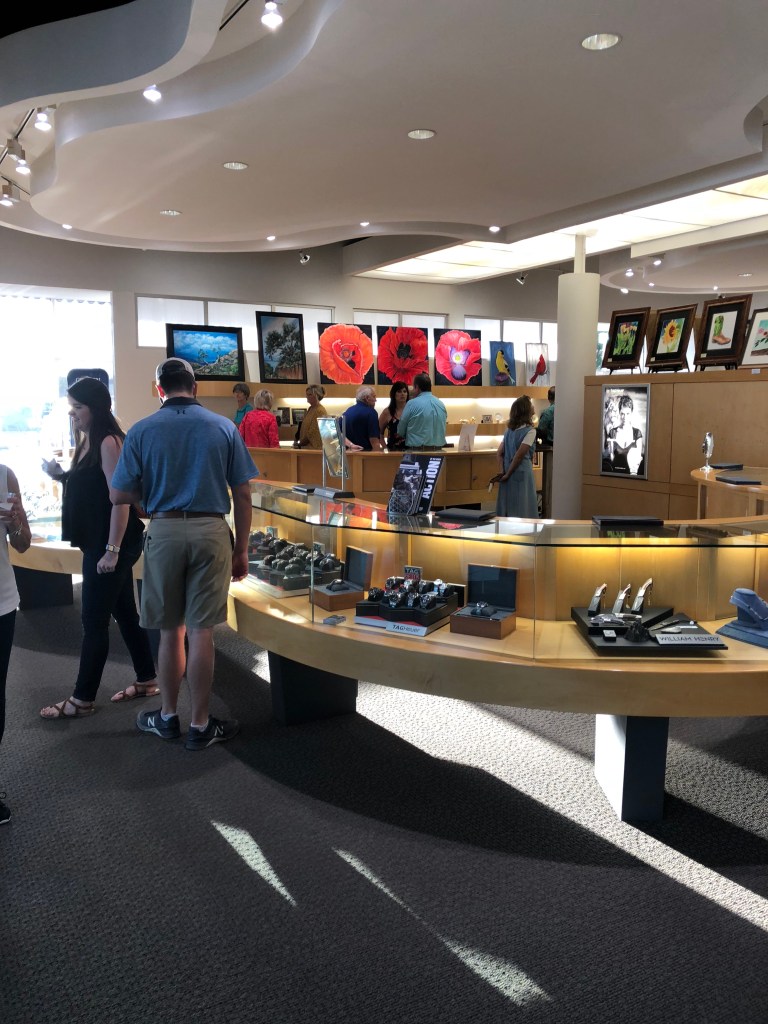
A smiling photo of Anne Crouch greeted visitors in the foyer of Barnes Jewelry, the new host for the First Friday Art Walk.

The recrudescence of the FFAW enjoyed a very positive public response, according to Bill Archinal, the COO/GM of Barnes, with 436 people coming through the doors during the first two hours.

Barnes Jewelry
Venue for FFAW

Archinal went on to elaborate the process by which Barnes assumed responsibility for continuing this cherished cultural tradition. He said that first, Barnes had display space for artists; secondly, store management felt that some entity would quickly quickly offer artists a new outlet, and Barnes needed to be first in line.

He then related that artist Mary Solomon was contacted and asked whether any of her former colleagues at Sunset Center would be interested in a new place to showcase their creativity. Solomon responded within a few days with a list of “Heck Yea’s!”

Altogether some twenty-three artists have agreed to rent space and all were present for the Alpha Art Walk, some of whose works are noted below.

Mary Solomon: Artist

The large flowers of Mary Solomon instantly call to mind Georgia O’Keeffe, but against a black background they have a Neo-Baroque cast.

Jim Kiper
“Trophies of War”

Jim Kiper draws much of his inspiration from the nine years he spent at his grandfather’s Cochise Ranch in New Mexico. His sculpture, Trophies of War, is a striking portrayal of a Comanche warrior with an attitude. The accoutrements of his victim, a cavalryman, are in hand, including the Soldier Blue’s scalp.

Bobbie Mason
Wind Chimes

Bobbie Mason repurposes heavy stainless steel piping as incredible wind chimes, each producing a deep ongoing resonance, like a Tibetan chant. Several of these in the backyard would provide a pleasing alternative to the Grackles.

The ambience of this art walk was refined, yet relaxed, tres cultive et classieux, in a gemstone context with wine bar. The staff of Barnes seemed genuinely happy to see the hundreds walk through the door, and stood ready to help if someone wanted a closer look at their art under the glass.

This site is a good fit to perpetuate the vision of Anne Crouch. Hopefully the event will, after such a splendid start, continue to grow, attracting numbers consistent with Sunset Center.

That location’s probable demolition, with the ensuing termination of First Friday, has caused much grief and regret in this community.

But, thanks to Barnes Jewelry, that hallowed Amarillo tradition has enjoyed a new lease on life, helping to “Keep Amarillo Artsy! Keep Austin Weird! Keep Lubbock in the Rear View Mirror!!!”