June 7, 2019: Russian Music Festival – WTAMU School of Music, April 28, 2019

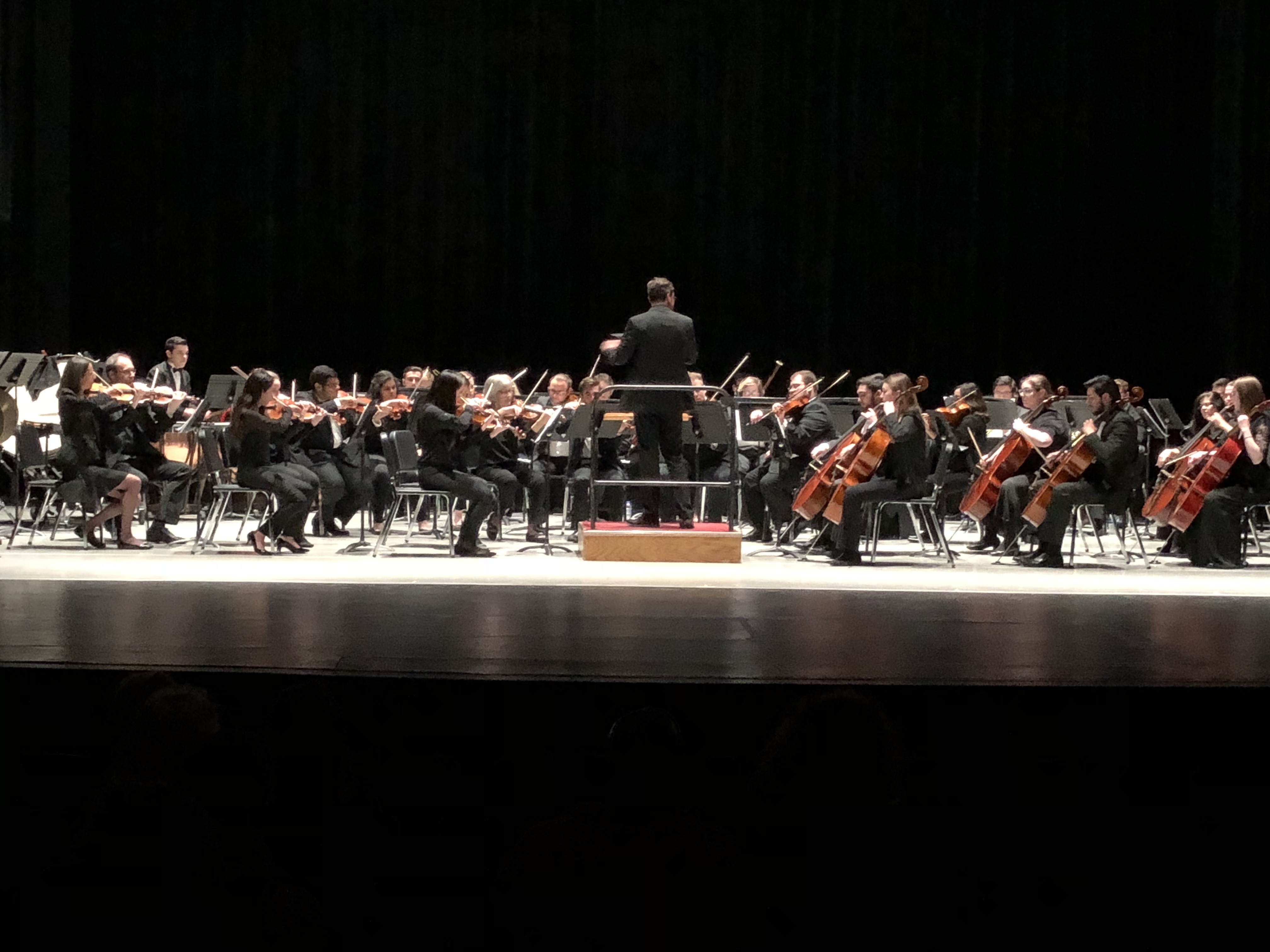
WTAMU Symphony Orchestra
Dr. Mark Bartley: Conductor
Branding Iron Theatre
WTAMU: April 28, 2019

Many recall the 1966 comedy The Russians are Coming, The Russians are Coming, with a star-laden cast including Alan Arkin and Jonathan Winters.

For the third year in a row, the WTAMU School of Music has staged its own artistic version of this classic which instead of absurd screen comedy featured various forms of Russian art of the most pristine quality.

On April 28 the Russian Music Festival celebrated Russian dance, of both the Mariinsky as well as folk forms and orchestral works by three Russian composers. Not too bad a selection for real cowboy country culture.

Featured ballet soloists were the dancing Orohovsky family: Arkadiy and wife Katya, along with son Alexei. Students from WTAMU’s Division of Dance performed traditional dances.

The orchestra, under the direction of Dr. Mark Bartley, opened with Nikolai Rimsky-Korsakov’s majestic Procession of the Nobles, significant for its aristocratic theme and coruscating trumpet fanfares.

The Waltz from Glinka’s opera A Life for the Czar embodies a light holiday fluff. One can almost imagine the imperial family aboard the royal yacht Standart enjoying themselves cruising the Gulf of Finland.

The orchestra, for its final work, played the Polovetsian Dances from the opera Prince Igor by Alexander Borodin. The work opens with a quasi-oriental sound, evoking the sound of the endless steppes under the rule of the Tartars.

The fluid dynamics of this work usually require performance by professional orchestras. The WT Symphony, responding to the direction of Dr. Bartley, admirably responded to the challenges of this piece.

And the dancers. Arkadiy especially demonstrated that Russian technique of apex extension which conveys the illusion of vaults in momentary suspension. His lifts of Katya were smooth and tension-free, while Katya’s pirouettes generated a blazing maelstrom of color.

Young Alexei, in his two dances, showed himself a consummate professional, embodying a mature stage presence consistent with a much older dancer. He will certainly make a name for himself in the world of dance, and soon.

The incongruity of this festival makes it all the more impactful. To think that here on the high plains of Texas we annually enjoy a celebration of fine art from half a world away. It doesn’t fit with the image of cows and windmills, but the arts in this part of the world are an ongoing surprise.

That’s why we say, now anticipating a fourth Russian Music Festival, “Keep Amarillo Artsy! Keep Austin Weird! Keep Lubbock in the Rear View Mirror!!!!”
May 31, 2019: Heathers-The Musical at Amarillo College

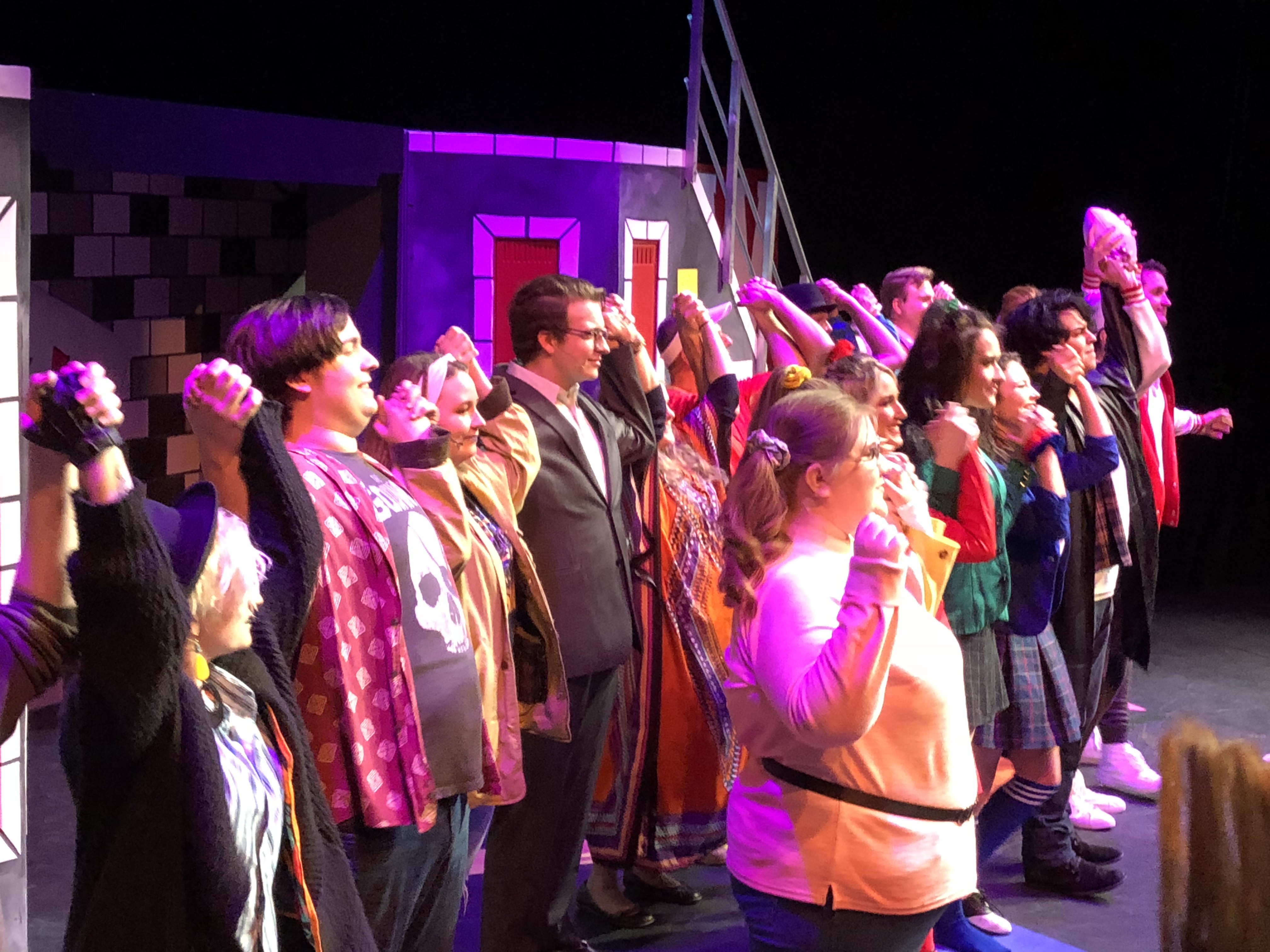
Curtain Call
Heathers-The Musical
Amarillo College , April 27, 2019

Birds don’t do it, but bees do, and so does the Amarillo College Theatre Department. I speak, of course, of cross-pollination, the former for the good of all nature, and the latter for the good of the arts in Amarillo.

AC, in five performances in late April and early May, used dramatis personae not only from the college, but also from WTAMU and Amarillo Little Theatre, as well as some high schoolers to stage Heathers – The Musical.

The attempt was bold and intentional and an unqualified success. Director Ray Newburg said he now anticipates such a collaboration every couple of years. It’s a win-win situation.

The production, as stand-alone, was dicey due to content. But, this season Heathers had company in Fun Home at Amarillo Little Theatre and Spring Awakening at WTAMU(see reviews). Though the three works span more than a century in creation, all impact with a shock art intensity that takes no prisoners.

And this is the only weakness of Heathers. Termed a dark comedy, one can argue that there’s nothing funny about teen mass-murder, suicides, bullying, sexual abuse and eating disorders. Oh yes, throw in sexual experimentation.

Such criticisms have assailed the stage since Aristophanes Lysistrata made mirth and raised hackles using the twin topics of brutal war and weaponized sex 2500 years ago.

This musical adaptation hit close to home, as the behaviors portrayed from thirty years ago were both aberrant and fringe, but now, unfortunately, have become mainstream. To enjoy this production, one has to distance themselves from the relevance and focus purely on the stage realities.

Those realities were impressive. Newburg said that over fifty auditioned for myriad parts and getting the right mix posed a huge problem. But solve it he did, ’cause the play worked!

The plot, intricate as high-tech circuitry, flowed, thanks to the skill of the actors and congenial interaction of the directors.

The stage set, as multi-purpose as furniture shown in Tiny House Nation, adapted variously as bedroom,school room, school gym, living room and cemetery.

The cast made their characters credible and dynamic. The group of Heathers were spot on: Queen of Mean Heather Chandler played by Kenzi Redwine; Just Plain Mean Heather Duke by Lauren Landtroop; Doesn’t Have to be Mean Heather McNamara played by Veronica Crawley, and all WTAMU students.

Dani Seager played the demanding role of Veronica Sawyer, and though only a recent high-school graduate, navigated the thin ice of clueless to conniving, all serving the higher cause of survival, with aplomb and mature elegance.

Other characters deserve mention. Joseph Ward as Ram and Ryan Sustaita as Kurt are the totally detestable jerk jocks, while Sabrina Ann Soto garners sympathy as the pranked victim Martha Dunnstock.

And Skylar Kent seizes the stage as the charismatic Baudelaire-quoting new kid who gradually morphs into a Dr. Jekyll/Mr. Hyde malignancy.

Amidst all of the plot intricacies, the cast sang, in solo or ensemble, more than twenty numbers. Guess that’s why it’s a musical.

The female roles seemed especially demanding. When asked whether he had to direct the ladies up to the requisite intensity, Newburg simply said “No!” He credited the Musical Director Mila Abbasova and Choreographer Kelbi Havins with shaping the characters, which then naturally coalesced in dialogue. So simple when you think about it.

Each performance was packed, with a cross section of all ages, especially young people, the latter enjoying the dated dialect of the 80’s.

The fact that this Off-Broadway play, blatantly challenging social mores and conventions was performed in this redder-than-red part of Texas is testimony to the courageous artists involved and the institutions that support them.

Thanks to the presence of provocative, unapologetic theatre in this unlikely place, along with all the attendant creative art forms, we say, with pride, “Keep Amarillo Artsy! Keep Austin Weird! Keep Lubbock in the Rear View Mirror!!!!

May 27, 2019: Evgeny Zvonnikov, Emmanuel Lopez: Faculty Recital – WTAMU – April 18

Evgeny Zvonnikov – violin
Emmanuel Lopez – cello
Dual Faculty Recital
April 18, 2019

Though six weeks ago, a duo faculty recital at WTAMU’s Fine Arts Complex Recital Hall by Evgeny Zvonnikov and Emmanuel Lopez certainly deserves mention. The two artists played works by Ravel, Gliere and Kodaly to an audience of some thirty lucky listeners.

Ravel’s Sonata for Violin and Cello was written between 1920 – 22 and dedicated to the recently-deceased Claude Debussy. According to Rositza Gosa of the Harrington String Quartet, Ravel wrote this work to break out of a compositional writer’s block lingering from the Great War and ‘surface beauty was the last thing on his mind.’

What emerges is a work that evinces a kaleidoscope of textures possibly suggesting Ravel’s musical path forward in a decade in which iconoclasts like Stravinsky and Hindemith would dominate.

The Allegro opens with the violin, which with the cello then produces an almost oriental harmony ultimately with the two instruments juxtaposing like a seesaw.

The Tres Vif features almost aerobic pizzicato on both instruments, not a problem for virtuosos like Evgenny and Manny. The theme morphs into an angry dissonance, perhaps a nod to Stravinsky.

The entire third movement (Lent) is beautiful, opening with a languorous cello then with the violin evoking a plaintive reflective vision, certainly an homage to Debussy.

The fourth movement, or Vif , in contrast, opens with a bouncy cello, which interacts with the violin in acceleration, ultimately resonating with the theme of the good guys coming to the rescue.

The second number on the recital was Eight Pieces for violin and cello, Op. 39 by Reinhold Gliere, a composer of Imperial Russia who survived the smothering restrictions of the Revolution and Stalinism to produce a huge array of works ranging from solo and ensemble to orchestral and film scores.

This piece, was written in 1909 and composed around western European dance themes with Russian peasant overtones. The peasant theme is emphasized in the Gavotte, followed by a tender and melodic Berceuse, after which a beautiful Conzonetta sings of longing, to note just three of the eight.

Manny’s cello was lyrical and sonorous throughout, while Evgenny’s violin evoked a terpsichorean flare. After all, Maestro Zvonnikov should know a thing or two about playing Russian music.

The final work in the recital was Duo for violin and cello, Op. 7, composed in 1914 by the Hungarian Zoltan Kodaly. If there is a overarching theme in the program perhaps it focuses on works by composers trying to find their voice.

The composer sought a Hungarian Renaissance through music and education, creating works from an ethnomusicological background that balanced folk melodies with western norms in a non-traditional manner. He became fast friends with Bela Bartok and his penchant for pedagogy credits him with the Kodaly Method for instruction.

The intrusion of WWI, along with the composer’s aversion to self-promotion forestalled widespread awareness of his compositions until the 1920’s.

The first movement, Allegro serioso, non troppo, has a single theme of multiple iterations, becoming very muscular and, at times, wide-ranging. Towards the conclusion the piece turns very lyrical, but, in typical fashion for both Kodaly and Bartok, ends with a dissonant chord.

The second movement, Adagio-Andante-Adagio, opens with a strong emotive cello, but halfway through the violin takes off on a febrile frenzy which never lets up, swelling to an anguished conclusion with a lovely violin and cello pizzicato.

The third, Maestoso-Presto, initiates a restatement of the first movement’s theme decorated by pizzicato. One can’t help thinking of Stravinsky’s Rite of Spring. Maybe on the eve of the Great War there was a dissidence in the musical air to counter the martial in politics.

All the audience could do at the end was stand and applaud enthusiastically, hardly commensurate with the quality of the art to which we were privileged.

That such art is here in Cowboy Country is because Amarillo is Artsy, and we want to keep it that way, and…”Keep Austin Weird” and, always, “Keep Lubbock in the Rear View Mirror!!!!”

May 14, 2019: Rutter’s Mass of the Children – AC & OPSU Choirs; Tuscon Arizona Boy’s Chorus

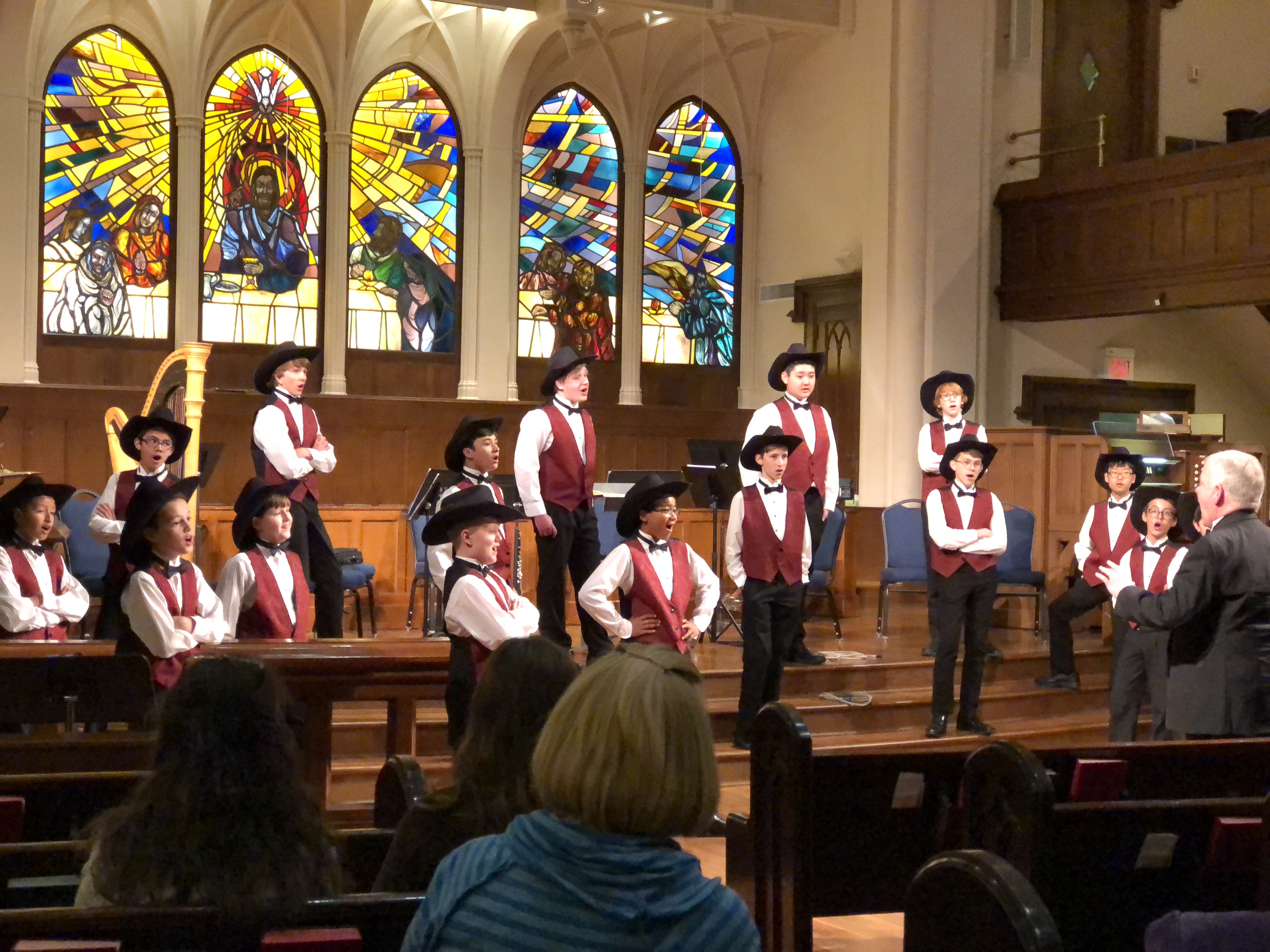
Tuscon Arizona Boys Chorus
Dr. Julian Ackerley Director
Polk Street United Methodist Church
Amarillo, Texas April 11, 2019
Used by Permission

Many remember, in the events leading up to January 1, 2000, how the phrase “harmonic convergence” was bandied about by self- styled savants to predict a coalition of rare celestial alignments which heralded either the Age of Aquarius or an imminent Apocalypse.

On April 11, a literal harmonic convergence occurred right here in Yellow City when the Tuscon Arizona Boys Chorus and the combined choirs of Amarillo College and Oklahoma Panhandle State University teamed with local musicians to perform John Rutter’s Mass of the Children.

But, unlike the cosmic form, this harmonic convergence wasn’t circumstantial, but the result of a fortuitous set of relationships and ensuing commitments going back over two years.

Dr. Dee Wilkins of OPSU shared that he has had a long-time love for this under-performed piece of music, which also involves a children’s choir. He and Dr. Julian Ackerley, of the TABC, began collaborative discussion on this performance as early as 2017.

According to Nate Fryml, AC choral director, Dr. Wilkins first contacted him at the Bellingham Music Festival in Washington state to talk about the prospect of a combined performance.

It all came together April 11 at the Polk Street United Methodist Church in Amarillo, assisted by ten local professional instrumentalists, with b&b for the boys provided by local families.

But, before the mass, the TABC got center stage and the audience was stunned by what it heard. Purity is an ideal, normally considered in the conceptual and abstract and rarely encountered in reality, From the opening note, the fortunate attendees encountered pure sound, as can only be delivered by young male voices not yet altered by life’s advances.

The numbers selected for the program highlighted the capabilities of this group, now celebrating its eightieth year, which makes it the longest-running, secular boys chorus in the country!

A few of the selections are noted here. The opening piece was Vivaldi’s Sing Unto the Lord, which alerted those listening to the tonal quality of this ensemble. In Mozart’s Ave Maria the boys fanned out down the two main aisles of the church where each boy, in effect, sang solo for those sitting nearby, but that voice then melded into an overtone of praise.

A poem by Robert Louis Stevenson, Gardener of the World, scored by Philip E. Silvey, had a final chord in eight part harmony! This feat would challenge state-class high school choirs.

And, this being cowboy country, the TABC, in hats and embellished with some fancy trick roping by a trio of lariat Wunderkinder held the final chord of Ghost Riders in the Sky for sixteen beats! These young fellers can come back to the Panhandle any time as singing cowboys.

Combined TABC, AC, OPSU Choirs
John Rutter’s Mass for the Children
April 11, Polk Street United Methodist Church

Rutter’s work is a non-liturgical Missa Brevis representing a fusion of English poems by Thomas Ken and William Blake, prayers of St. Patrick and Bishop Lancelot Andrews, and aspects of the traditional Latin and Greek mass.

First performed in 2003, the five-part piece consists of soprano and baritone soloists, childrens and mixed choir, and accompaniment of various combinations, of which the audience heard chamber orchestra and organ.

Sixty plus choristers from both collegiate choirs, plus ten musicians made for a crowded stage. The TABC divided antiphonally in the sides of the balcony.

The admixture of children, community college, university and adult performers proved congenial, with the boys especially noted for maintaining a stoic discipline and a steady focus on the director.

This work is a masterpiece, embodying the magnum mysterium of the traditional mass while Anglicizing with poetry and modernizing with soloists and instrumentation.

The only downside to this performance was the audience size. It’s regrettable that such a tour-de-force of composition and performance wasn’t enjoyed by more. If Dr. Wilkins has his wish, perhaps more performances are in store.

But, for those present, the experience remains memorable. For those who traveled here and performed, as well as local performers, our gratitude, because all have helped to “Keep Amarillo Artsy! Keep Austin Weird! Keep Lubbock in the Rear View Mirror!!!!”
May 5, 2019: Harrington String Quartet @ the Fibonacci Space

The Harrington String Quartet
April 12, 2019
At the Fibonacci Space


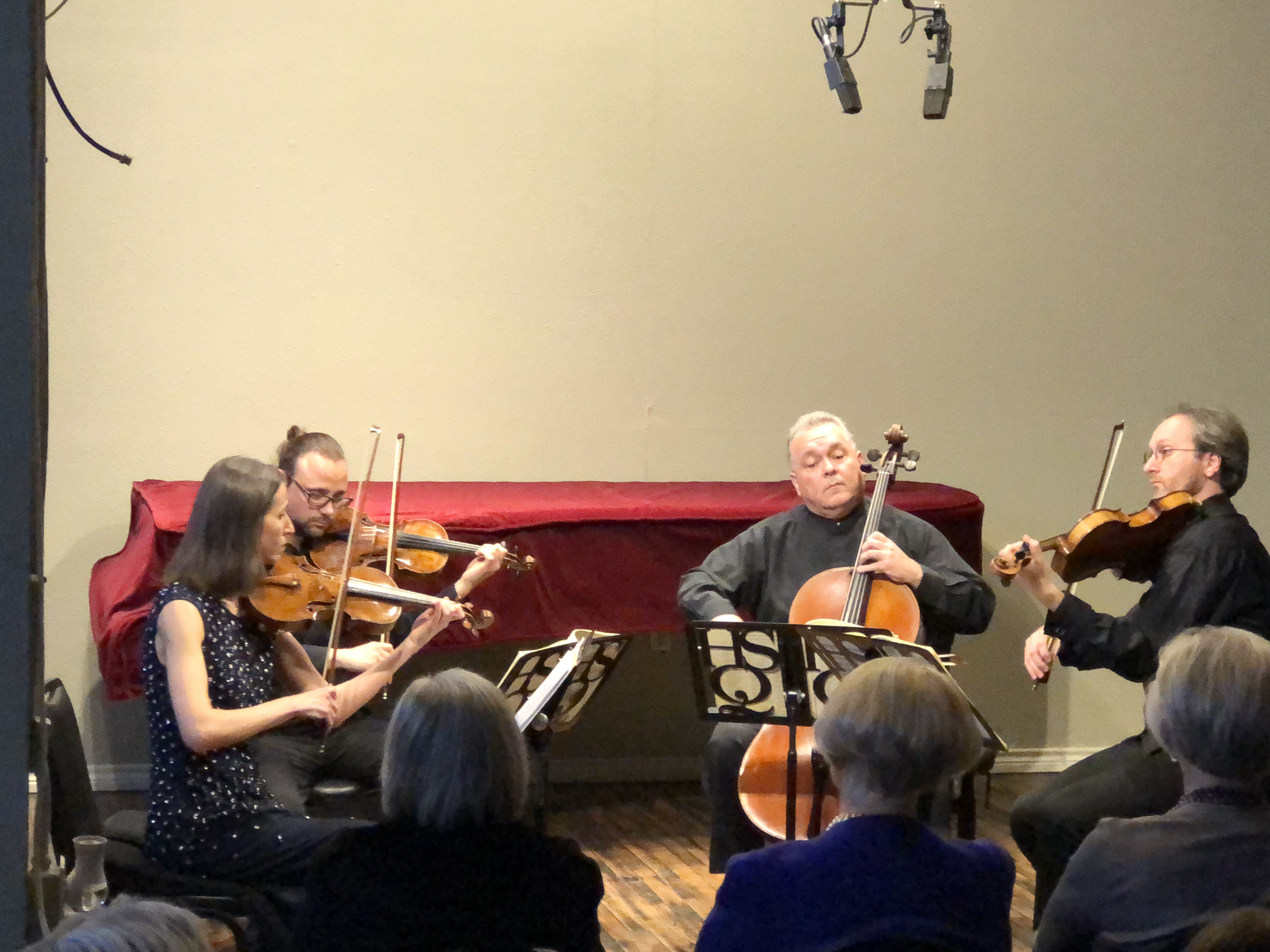
On April 12, the internationally-known Harrington String Quartet held their last performance of the year at the Fibonacci Space, home of Chamber Music Amarillo. An ongoing renovation of Northern Recital Hall necessitated the change-of-venue.

The Quartet, composed of Rositza Jekova-Goza and Evgeny Zvonnikov on violin, Vesslin Todorov on viola and Emmanuel Lopez as cellist, played three works: String Quartet in B-flat major, K. 458 ‘Hunt’ by Mozart, Italian Serenade by Hugo Wolff and String Quartet in E flat major, Op. 44 by Felix Mendelssohn.

The so-called “Hunt” was one of six quartets dedicated to Haydn, termed by Mozart as father to receive his (WAM’s) children. The moniker “Hunt” was a later appellation, resulting from a first movement resonance similar to a hunting horn.

The “Allegro vivace assai” has a nice melding of parts and a prancing rhythm making for easy listening in late 18th c. circles.

The Menuetto is slower-paced, with short tonal statements followed by short runs. Perhaps Mozart was releasing his inner Telemann.

The “Adagio” is stately, featuring the first violin for much of the work. One can truly wonder about Mozart’s mood as he was writing for Poppa Haydn and whether he somewhat tempered his style.

Finally, the “Allegro” opened with high energy and maintained a sustained pulse throughout, with violin assertion and responses from the other three instruments.

Hopefully Haydn was happy with this child, as well as the other five children bequeathed to him by the young genius.

The Quartet substituted the “Italian Serenade” by Hugo Wolff to replace a work by Arensky due to the absence of the pianist. Not a problem as the piece was a delight.

Composed in only three days in 1887, the composer, possibly drew inspiration from poems by Joseph Eichendorff and the author’s novella, “From the Life of a Ne’er-Do-Well.”

Considering the unhappy fate of the composer, whose life was cut short in a syphillis sanitarium, this piece is light, whimsical, and easy on the ears.

The final work of the season was Mendelssohn’s “String Quartet in E-flat major, Op 44 No. 3,” composed in 1838 and one a set of three dedicated to the Crown Prince of Sweden.

Though the composer is normally considered a traditionalist, the exuberant emotions which permeate this work acknowledge the context of Romanticism and the influence of Beethoven.

The first movement, “Allegro vivace,” sequences sixteenth notes in various patterns either as a statement or adornment. The overall mood is aerobic with an uplifting counter-point that at times detaches from the melody, but which works.

The rapid-fire opening by the violins in the “Scherzo” is answered by the viola and cello, and reminds one of a Wild West Hollywood scene.

By comparison, the “Adagio” is almost wake-like, somber and reverent, with an overarching violin singing in a lyrical descant.

The assertive beginning of the fourth movement, has the first violin setting a tone maintained almost to the end, with each instrument playing autonomously until all coalesced towards the end in a magnificent conclusion.

After the applause, the sound of Harleys and pickups on 6th St. reminded us, like a GPS, of our location: a place where none outside the Panhandle pale expect such sophisticated fine art.

For the HSQ, and to all individuals and groups who create elevated art in this place, goes our gratitude and our thanks for a wonderful season.

In eager anticipation of the 2019/2020 Arts Season, we say, “Keep Amarillo Artsy! Keep Austin Weird! Keep Lubbock in the Rear View Mirror!!!!”

April 29, 2019: Amarillo Symphony – Beethoven’s 9th

The Amarillo Symphony
Chorus and Soloists
Beethoven’s Symphony No. 9


The final concert of the Amarillo Symphony’s ninety-fourth season was the much-anticipated Beethoven’s Ninth Symphony, performed April 26, 27 at the Globe News Center. And, extra icing on the cultural cake came in the form of Brahm’s Tragic Overture.

Brahms composed two works in tandem in response to his award of an honorary doctorate from the University of Breslau. The first piece, the Academic Overture exuded the ostentation of cap and gown. In the second, Brahms sought to express his darker, melancholic core.

Some might say Tragic is a misnomer, and that Assertive or Turbulent as titles are more apt. Regardless, this variegated work takes us on an ocean voyage, in a small craft, through roiling seas with patches of calm.

The ups and downs of real life present themselves, but grief, fear and despondency do not. Perhaps the two pieces are antipodes: idealism versus reality. If so, reality shatters Gaudeamus Igitur.

Then Beethoven, rebel, iconoclast, champion of the hero and common man, spoke to us through his music, lighting a torch to enlighten a better world.

Many in the audience recalled the Christmas Day Freedom Concert of 1989 with Leonard Bernstein in Berlin, followed weeks later by the Amarillo Symphony, Civic Chorus and West Texas University Chorale.

Now, thirty years later, the Symphony, Amarillo Master Chorale, and the First Baptist Church Sanctuary Choir raised the bar not only on these earlier performances, but also on all offerings of the Ninth experienced by this writer in over fifty years. Several factors combined to make this concert both memorable and spectacular.

The first was the orchestra, which played in tandem. Cellos and Basses rarely feature, but they introduced the iconic theme with strength, dignity and precision.

The Ninth orchestral score is vulnerable to the caprice of instrumental soloists, but in this performance the French Horn sang with clarion purity and the tympani was cogent and confident.

Yet the soloists who make or break this epic work are the vocalists who must master the demanding “vocalistics,” without succumbing to the shibboleths that bedevil singers doing the piece.

Suzanne Ramo, in her fluid coloratura remained in sync with the conductor, while Amanda Crider, as mezzo, sang to the audience and not to the high soprano.

Johnathan Beyer, bass, covered the incredible range as only a true professional is capable, while Dominic Armstrong hit the high one on Sie ein Held zum Ziegen, oft the sound of only a croaky choke.

Greatest of compliments go to the chorus and their directors, Nate Fryml and Dan Baker, who performed beyond expectations and at a level surpassing similar choral presentations encountered in the last fifty years!

Three factors contributed to such sterling quality: astute direction; vocal talent; choral discipline. What especially distinguished this performance was the precision of diction. Imagine, Panhandle folk singing Deutsch better than the Dresden Staatskapelle Chorus!

For instance, when the bass section had to range to an E singing Bruder uber’m Sternenzelt, Muss ein lieber Vater wohnen, each singer enunciated every word in isolation, without a single voice breaking pattern in rhythm or elision. Impressive!

In addition, every part held forth in strength, the sopranos hitting over seventy high A’s with facility.

And the apex, the pinnacle, often called the greatest expression of human voice, when the females sang out Seid umschlungen, Millionen! Diesen Kuss der ganzen Welt! with other parts joining in rounds, was truly transcendent!

Further compliments are in order. Maestro Jacomo Bairos directed this magnificent work with dynamic charisma, inspiring the best from all performers. And the audience had both the courtesy and sophistication to remain silent until the conclusion, then rose in thunderous ovation that lasted over five minutes. All knew they had experienced something world-class!

And, as we left the world of art, into the vaunted Sternenzelt of the High Plains, the words kept singing in our heads and hearts, Alle Menschen werden Bruder, giving us hope for a better world.

For epic works like Beethoven’s Ninth Symphony, we say, with deeper conviction, “Keep Amarillo Artsy! Keep Austin Weird! Keep Lubbock in the Rear View Mirror!!!”


April 26, 2019

The Amarillo Museum of Art recently hosted what has become the annual Amarillo College, WTAMU Student/Faculty exhibition. As always, the talent and quality of especially the young artists astounds. This post examines just a few works shown by the students and teachers from each institution.

Stephanie Jung
Interstices
Charcoal on Paper


Stephanie Jung, AC faculty member, created, in Interstices a powerful, life-size representation of the the yin/yang of relationship dynamics. By her own description, she danced along the periphery of tropes to convey the ideas of blending, bonding, and merging with the inherent difficulties and disappointments in all Anima/Animus relationships.

Gavin Dorman
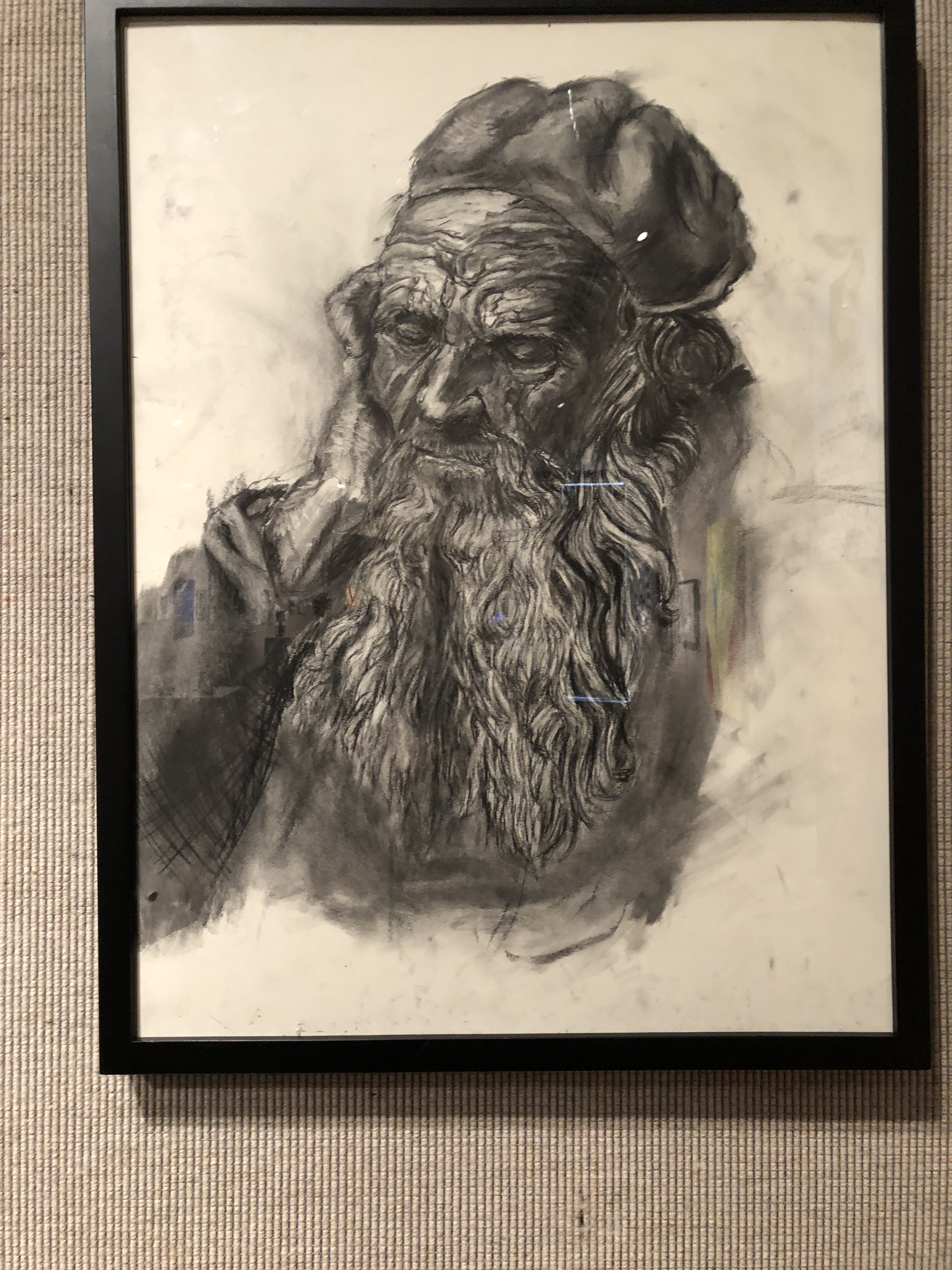
Study after Albrecht Durer
Charcoal on Paper


Gavin Dorman, a sophomore at AC, outdid the German Renaissance master in this creation from life drawing.

Vance McSwain
Qunatum Gender
Mixed Media on Panel


Vance McSwain, from the WTAMU art faculty created this symbolic study of the whole gender identity paradigm in Qunatum Gender. Note especially the prominently-placed apples and oranges, challenging to the viewer to reconsider preconceptions.

Nina Wyre
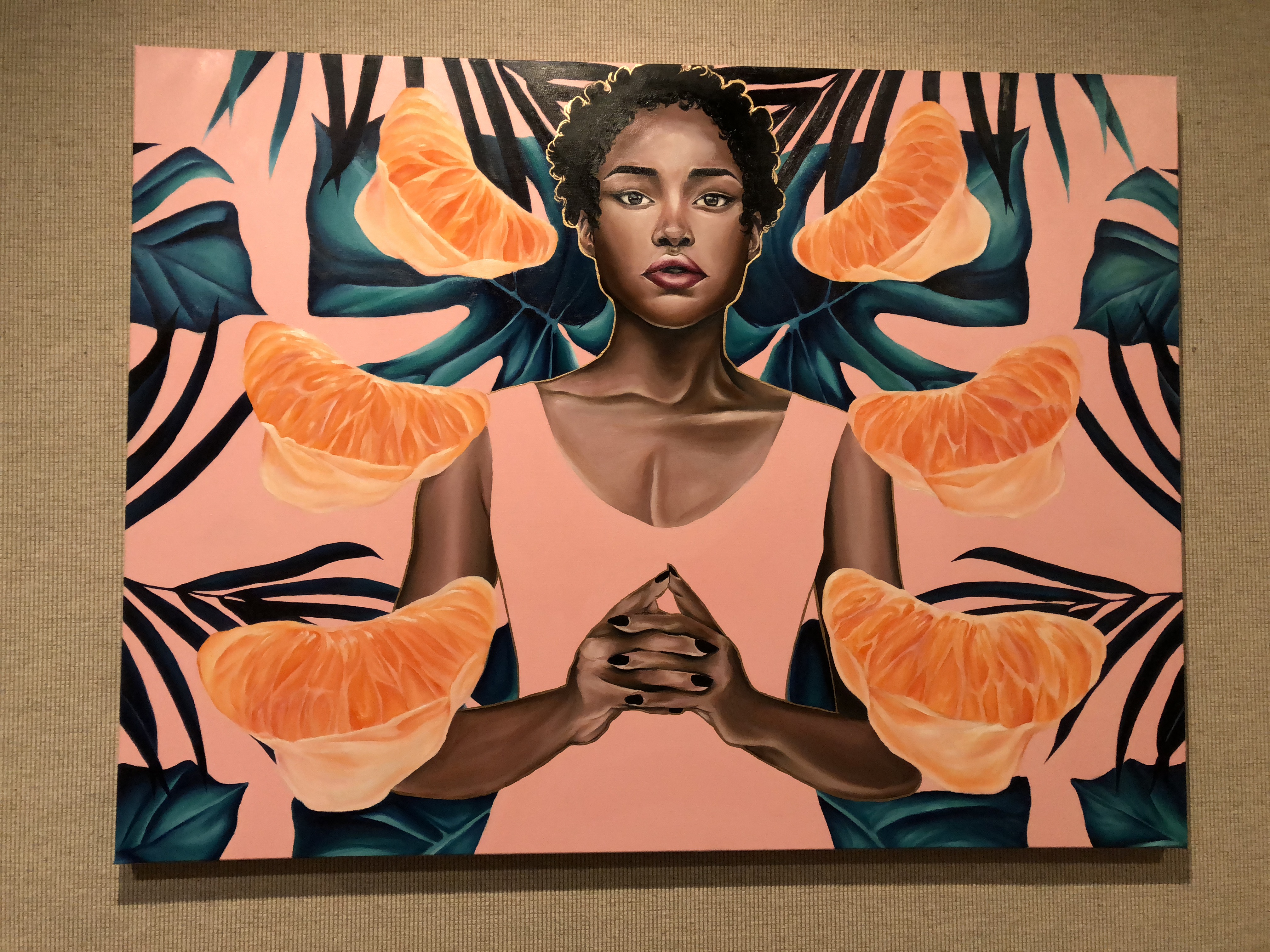
Eve
Acrylic and Oil on Canvas

In Eve, graduate student Nina Wyre created a tour de force iconoclastic portrayal of first woman-womankind. If she is producing works like this while still in college, the art world is on notice!

Blake Cripps
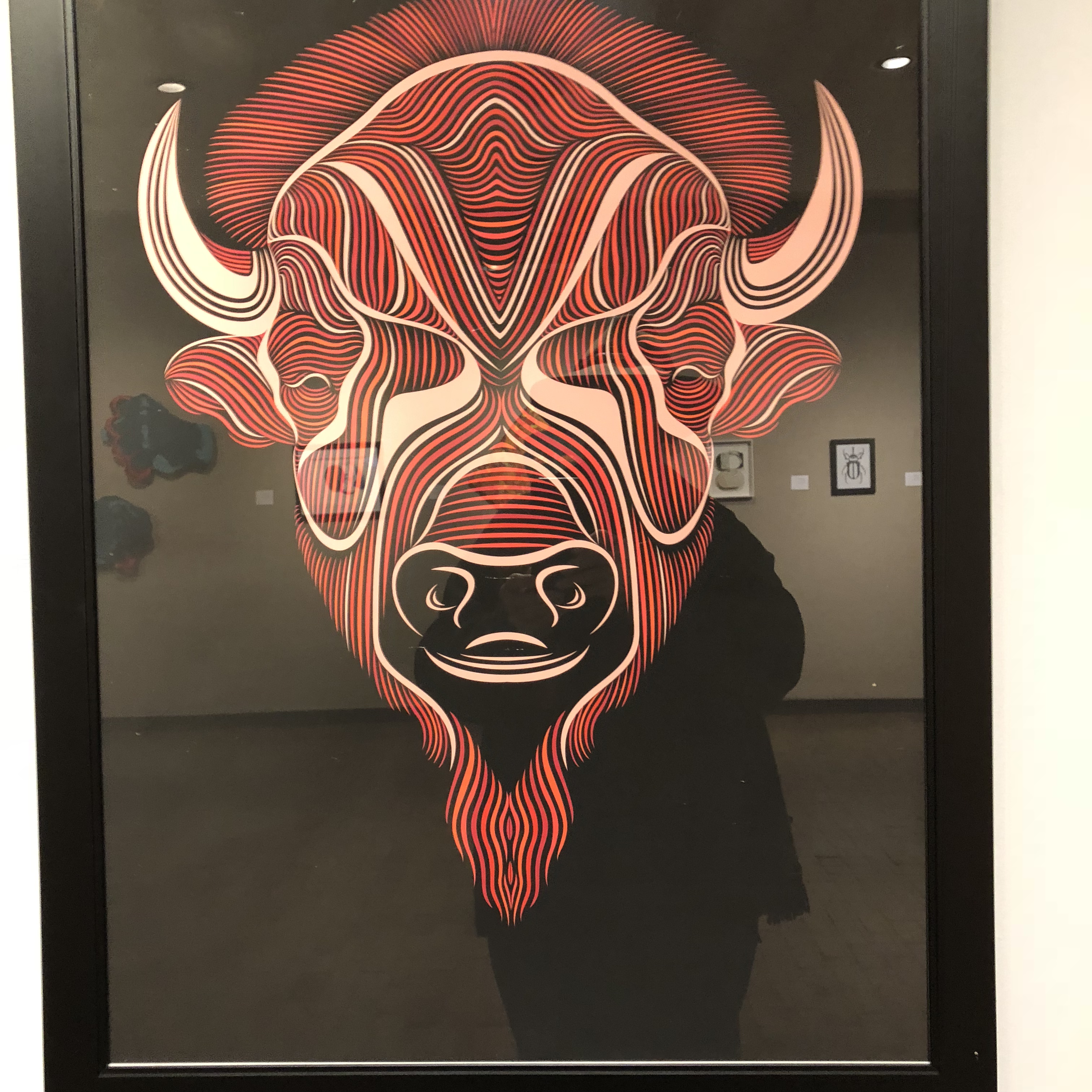
Bison
Digital Media on Paper


Junior Blake Cripps captured a shamanic image of the noble animals that once roamed the Panhandle in the millions. This work is on par with those of the first people whose artwork is in galleries in Taos and on Canyon Road.

Aaron Taylor III
Distance
Acrylic on Panel

Finally, Junior Aaron Taylor III, in an evocative piece entitled Distance, captured a quality reminiscent of Puberty, the disturbing work of Norwegian Edvard Munch.

If a purpose of artists is to suggest alternative perspectives, then the students and teachers at both schools accomplished their mission splendidly!

Our gratitude goes to both departments for their support and perpetuation of the arts, and to AMOA for again hosting this exhibition.

This collaboration is a fundamental reason that the arts in Amarillo flourish, and we, as always, want to “Keep Amarillo Artsy! Keep Austin Weird! Keep Lubbock in the Rear View Mirror!!!!!”

April 23, 2019: Amarillo Opera’s Outrageous Spring Gala

On April 6, Amarillo Opera hosted its Outrageous Spring Gala, which stratospherically exceeded expectations of success and served up the richest concoction of opera sweets imaginable.

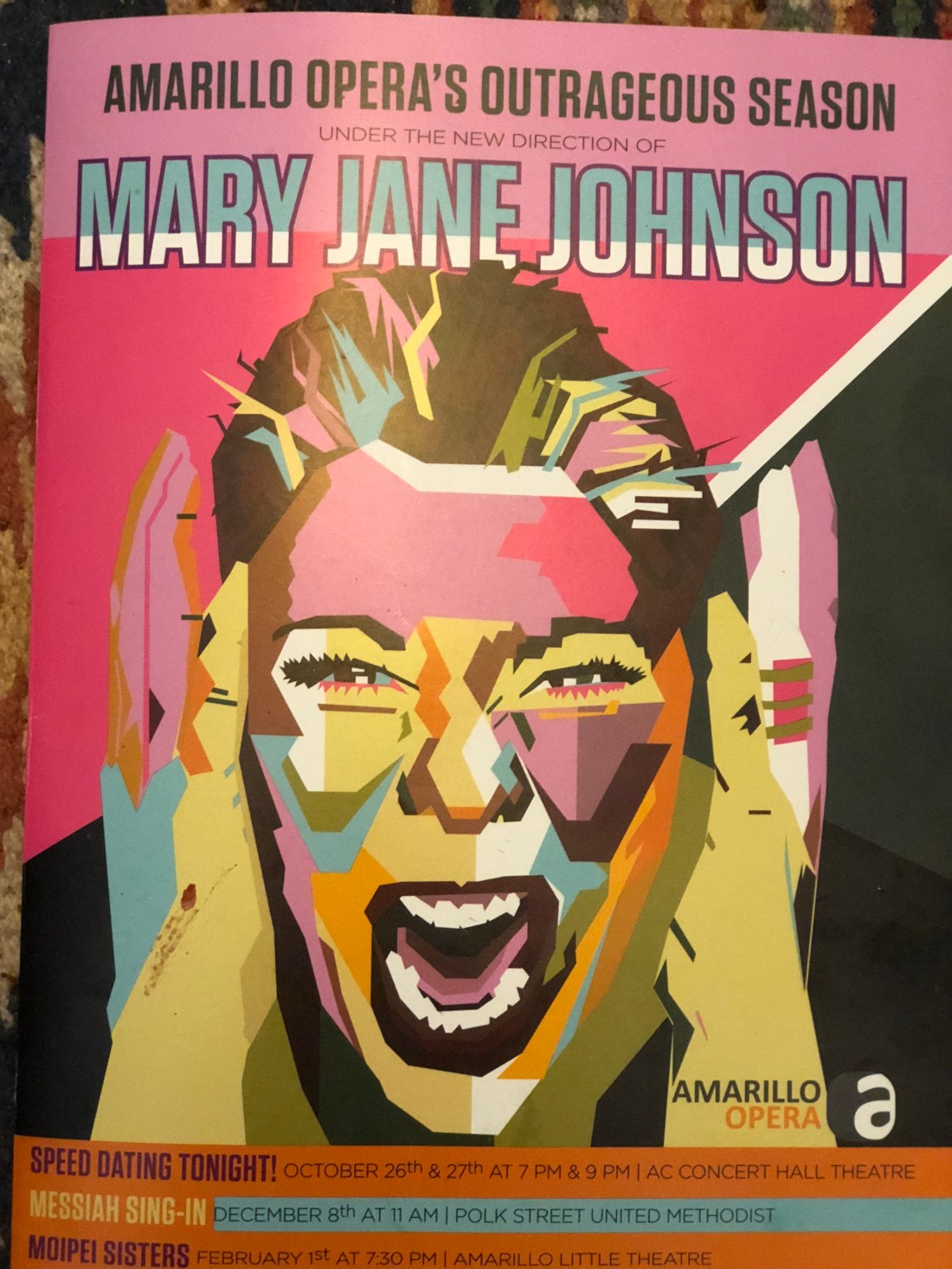
The event stands as a microcosm for a successful year, which saw the organization under the inspired leadership of Metropolitan Opera star now Amarillo College faculty member Mary Jane Johnson pull it back from the abyss of oblivion to stand on firm ground.

That survival was celebrated in style by the first Gala in years, where a combination of visiting and local talent entertained and enriched several hundred fortunate fine arts fans at the Globe News Center.

This post can only address a few of the twenty individual and ensemble performances, but it’s worth noting that MJ did sing! This being the first night of the Final Four, she came on stage, donned her Texas Tech hat, and proceeded to lead the audience in the Tech fight song.

Hey, we in the Panhandle can kick back and be sophisticated simultaneously. Besides, Tech won. She should have done a repeat before the national championship game.

Cara Collins
Cruda Sorte

Cara Collins, in Cruda Sorte from Rossini’s L’italiana in Algeri, gave an outstanding rendering of a woman betrayed by Fate, whose supplicatory introspections conclude as she becomes a woman with a plan.

Rainelle Krause
Der Holle Rache


Rainelle Krause went regally ballistic as the queen of the night singing Der Holle Rache from Der Zauberflote by Mozart. This aria, famous for its sequence of quintal “Ah’s,” fairly spits venom and spite, which Ms. Krause did with artistic gusto.

Nicole Keeling and Eric Berry
O Soave Fanciulla

Nicole Keeling and Eric Berry hit all of the right notes in the famous duet O Soave Fanciulla from La Boheme, that soars in a spine-tingling collaboration that features small talk as well as passion.

Sarah Beckham-Turner
and
Andrew Craig Brown
La ci Darem La Mano

Sarah-Beckham Turner and Andrew Craig Brown joined their phenomenal voices to sing La ci Darem La Mano from Don Giovanni by Mozart in which Don Giovanni persuades a reluctant Zerlina to forsake her fiance and come away with him. But, there’s that tipping point, when, in a volte face Zerlina takes control and off they go.

Eric Barry
and
Andrew Craig Brown
Au fond du temple saint

Eric Barry and Andrew Craig Brown thrilled the audience with the most exquisite male duet in all of the operatic repertoire, Au fond du temple saint, from Bizet’s Les pecheurs de perles. Those few phrases when Eric lofted his tenor on high and Andrew Craig was perfect in harmony were transcendent, taking all out of the present to a place of pure beauty.

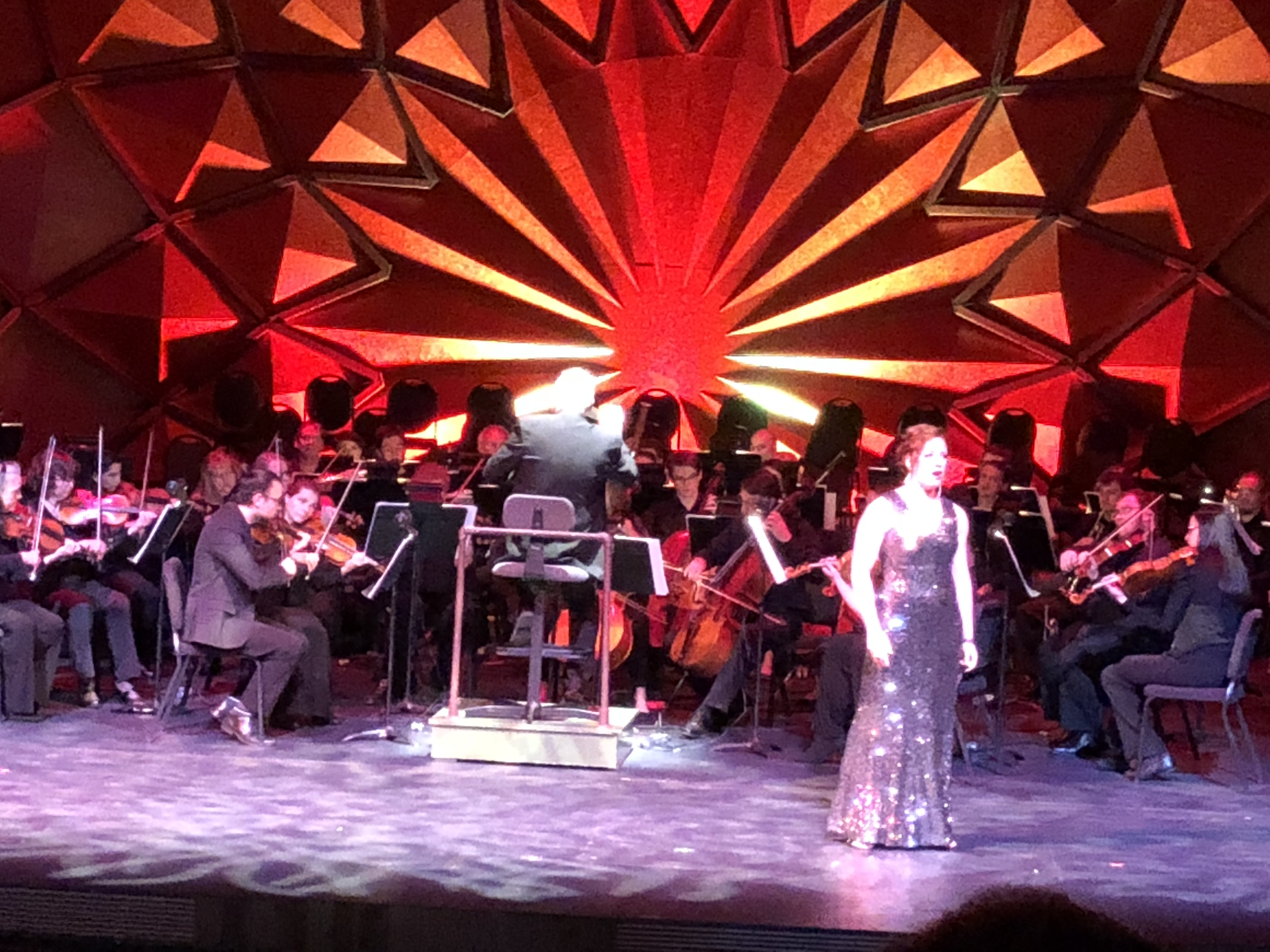
Other performers deserve at least some mention. Maestro Andy Anderson of New York City conducted the orchestra with Evgeny Zvonnikov as Concert Master and demonstrated a professional stage presence adjusting to the fluid dynamics of the production.

The chorus, most notably, sang Va Pensiero from Verdi’s Nabucco. This work holds a special place in the hearts of Italians and several times has been suggested as the national anthem.

Local artists showcased their high level of talent and included vocal soloists, and instrumentalist Mackenzie Nies, who played Polonaise Brillante No. 2 by Wieniawski on the violin.

Opera, the ultimate performance art, now redefined and recast is alive and well in Amarillo, thanks to Mary Jane Johnson and enthusiastic supporters, all who want to “Keep Amarillo Artsy! Keep Austin Weird! Keep Lubbock in the Rear View Mirror!!!”


April 21, 2019: Met Opera in HD – “Die Walkure”

The Panhandle, during the first week of April, enjoyed two major operatic events: the encore HD live performance of the Metropolitan’s opera Die Walkure; Amarillo Opera’s Outrageous Spring Gala.

Because helmeted ladies with spears command attention, Wagner’s signal work will first receive consideration.

The plot is what it is, and generations of philowagnerians just accept that as a baseline and move on.

Similarly, if there is some cosmic verity of a moral, it’s don’t piss off Daddy, even if he’s king of the gods he’s conflicted with human issues, including a heavenly wife who gives him hell.

Two aspects of this production make it memorable: the stage and the performance of Christine Goerke who played Brunnhilde.

Robert Lepage, the director, went to Iceland for inspiration, which he found in translations of Viking skald sagas as well as the tectonic tension fracturing the island.

The result was a rotating helix of independent planks which was adapted for a number of scenes. These included Hunding’s hearth, a good place to spark incest, a wild wald where the mischief continues, and a perfect pyre for immolation.

In the opera’s iconic scene, “The Ride,” Nordic Amazons rode their helical steeds like broncos, something we know about in cowboy country, all the while hollerin’, operatically, of course, Hojotoho, which is Valkyric for Yee-Ha!

Then there is Brunnhilde, the character and the voice. American Christine Goerke becomes, with this performance, the Brunnhilde for this generation.

That voice, a Met rafter ringer, projected both an imperious warrior woman, as well as a vulnerable Daddy’s girl. This armored diva alternated between the polarity of these roles with facility. Kudos to this Long Island kid who has found her niche so close to home.

Special thanks goes to Mr. Deano Owens, the manager of the Hollywood 16, who makes viewing the Metropolitan Opera possible, and in the comfort for first-class lounge chairs.

These shield maidens cum body snatchers can come out here to the wide open Texas spaces anytime and become singing cowgirls. There’s plenty of stage and sky for them to sing to.

And, in so singing, they will augment the ongoing effort to “Keep Amarillo Artsy! Keep Austin Weird! Keep Lubbock in the Rear View Mirror!!!!!”


April 18, 2019: Diego Caetano at Amarillo College – April 2, 2019

Diego Caetano
Amarillo College
April 2, 2019

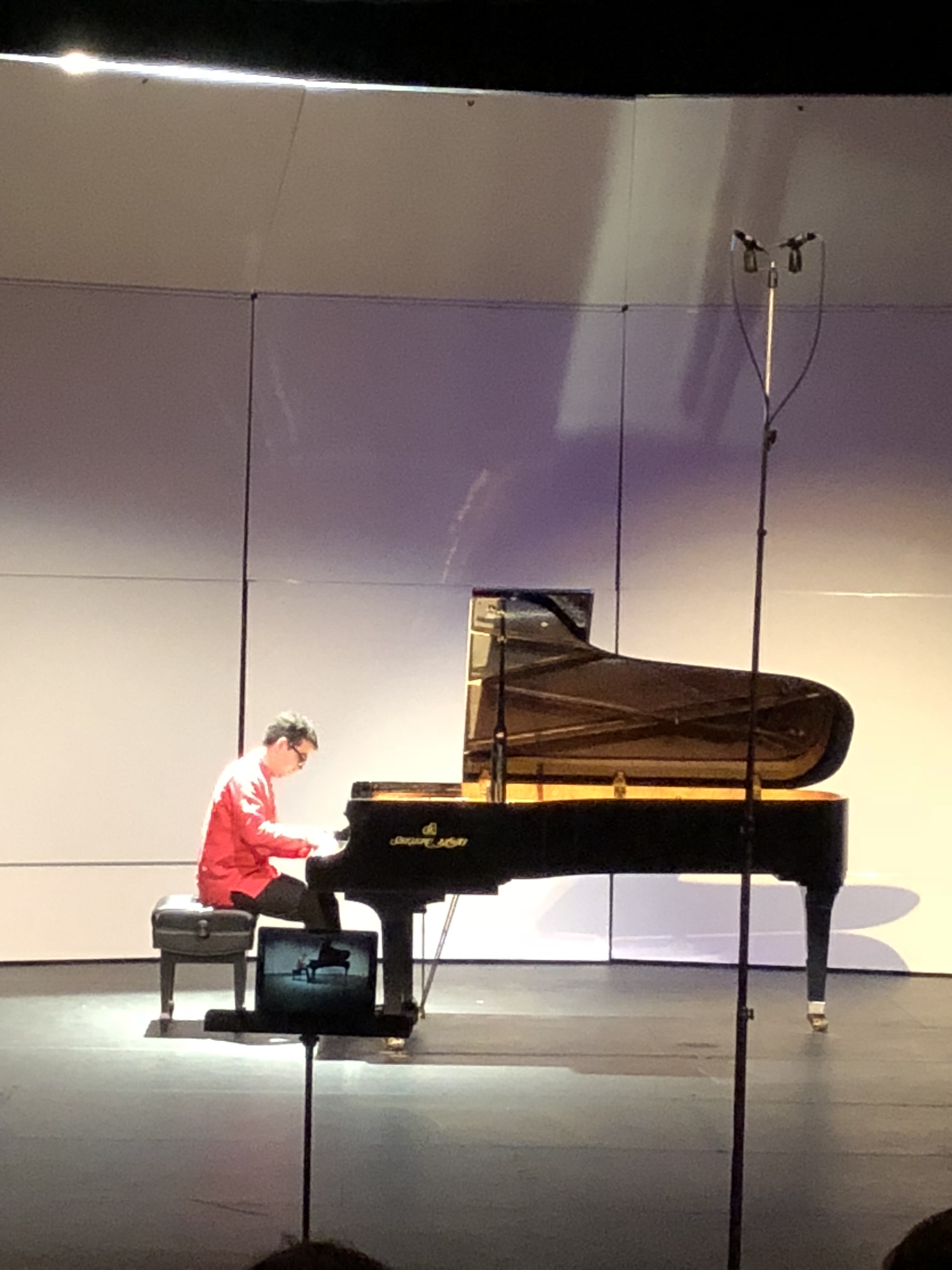
Some two-score lucky listeners on April 2 at the Concert Hall heard a solo recital by AC’s world-renown pianist, Diego Caetano.

Diego opened with Haydn’s Sonata in E flat Major Hob XVI/52. This was the last of Haydn’s sonatas which some consider his greatest, and was composed in 1794 for Theresa Jansen, a noted London performer.

A peppy opening Allegro leads to a pounding counterpoint prompting the question of whether Haydn was subtly mocking Baroque structure.

The Adagio first conveys a happy spring morning feel, but changes themes which are then bounced back-and-forth. The Finale is snappy then arpeggiated with an almost modern sound.

The harmonic complexity and moods of this work are broad for Poppa Haydn, making one wonder whether he was revealing a wry sense of humor.

Or, perhaps it was the infusion of the artist’s personality into the piece. Only the composer’s shade and Diego know the answer.

A second sonata was the massive five part Sonata in F minor Op 5 by Johannes Brahms. This work, a combination of Romantic adventurism within a classical scaffold, was written in 1853 when Brahms was only twenty, and dedicated to Countess von Hohenthal of Leipzig.

The opening powerful chords of the Allegretto suggest an influence for Rachmaninoff. The themes in different keys are developed with the right and left hands in almost adversarial confrontation.

The Andante had a totally different character, beginning pensively and soft under the aegis of a romantic poem by Otto Inkermann then elaborating two themes possibly representing beating hearts.

A romping Scherzo is followed by an Intermezzo which Brahms called Ruckblick or “remembrance.” This movement repeats Beethoven’s “fate motif” from his Symphony No. 5 which also appears in the first and second movements.

The Finale has an unusual opening, but then develops several themes, from the ponderous to the playful, but which coalesce triumphantly.

This work stands as one of the pinnacles for solo piano performance, and we heard an inimitable rendering this evening in Cowboy Country.

Two short works in the list included Allegro de Concierto by Enrique Granados. This work, written in 1903, was the winner in a competition at the Royal Conservatory in Madrid whose entrants included a young Manuel de Falla.

This piece, as opposed to most of his oeuvre, is surprisingly free of Spanish themes and written in a sonata form. Though at times stating little more than a simple melody, at others, especially towards the end, the work resounds with emphatic arpeggios.

The final selection of the evening was Tango, Op 61, by the Brazilian Marlos Nobre as a memorial to Arthur Rubinstein. Thus, this piece features a smorgasbord of themes, from a sort of Hollywood 1930’s to almost a war footing. Hopefully this performance means that we’ll be hearing more of Nobre.

World-class performance by a world-class artist, free and open to the public out on the wide open plains: where else but Amarillo? So, all the more reason to say, “Keep Amarillo Artsy! Keep Austin Weird! Keep Lubbock in the Rear View Mirror!!!!”